
Holy Extortion at the Palace Gate
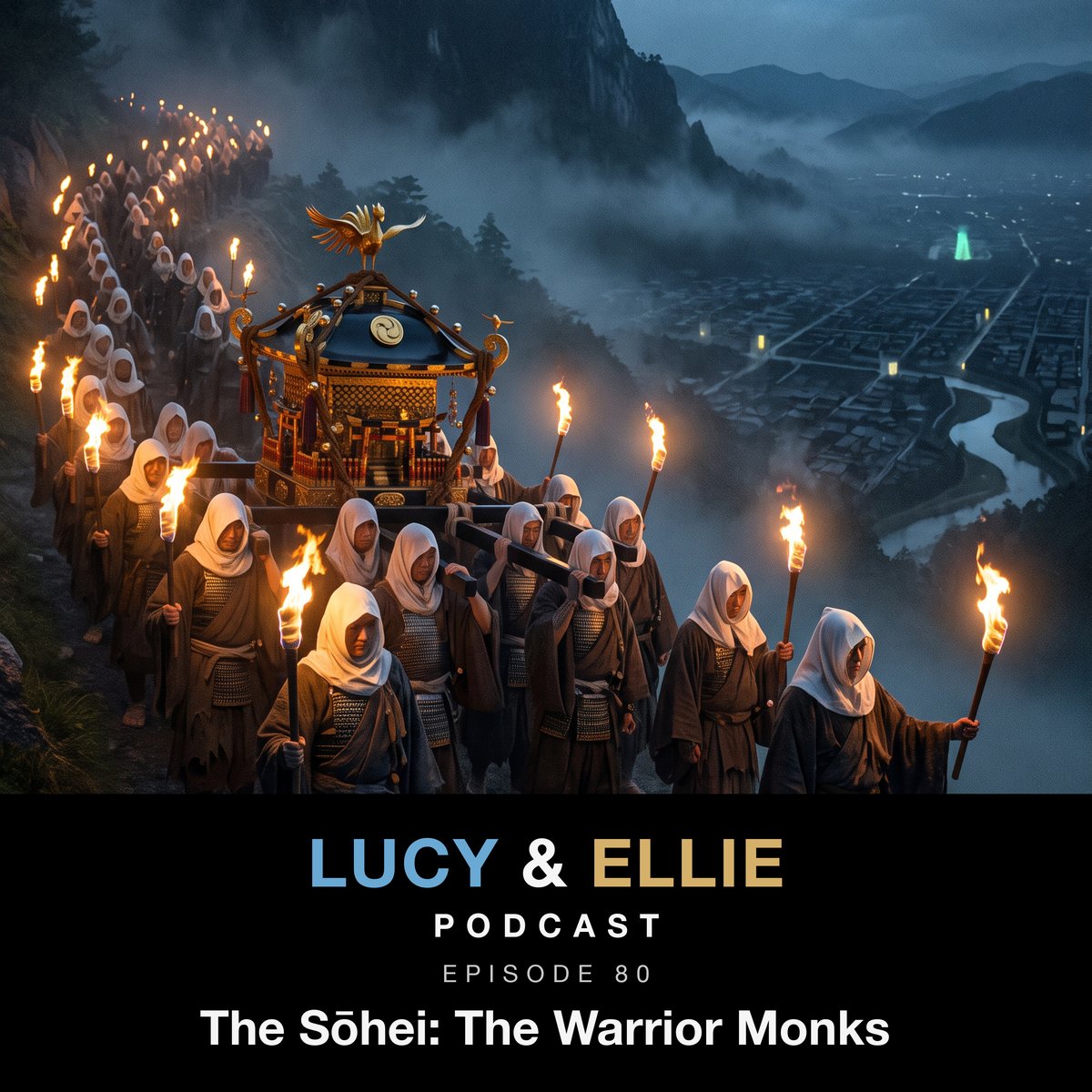
The scene that opens the episode is the whole story in miniature: three thousand men march down from Mount Hiei, set a palanquin carrying a mountain god in the road outside the emperor’s palace, and step back from it. Nobody in the palace can touch the box, because a god lives in it. Nobody can move it, because only the men who carried it know how to move it without cursing the city. So the most powerful people in Japan sit behind a wall and wait to find out what the mountain wants. It is, as Ellie puts it, the politest hostage situation in history — and it worked for five hundred years.
The Mountain, and a Charter That Was Actually a Ban
Mount Hiei was founded in 788, six years before Kyoto itself, and the temple never forgot it came first. The popular story credits the tenth-century abbot Ryōgen with founding an army of warrior monks. The document doesn’t say that. In 970, after a hall burns down for the second time, a furious Ryōgen issues twenty-six rules — and most of them are about straw sandals, meat and onions in the halls, and cattle stabled in the wrong rooms. Rules eighteen and nineteen ban masks, head coverings and weapons outright, and note the same order had already been posted three years earlier and ignored. The man credited with inventing the warrior monks wrote the oldest surviving order telling them to put the swords down.
The Gōso: How to Threaten a City With a God
The technique the monks perfected has a name — gōso, a forceful appeal — and it happened roughly three hundred times over five centuries. The reasoning behind it is almost bureaucratic: native gods were believed to be better at curses than the buddhas were at blessings, so a drought, a plague or a sudden illness in the palace was read as a neglected god’s complaint. When guards did fire on a procession — in 1177, killing a monk and hitting two of the sacred carts — the court’s response tells you who actually held the power: it exiled its own governor and arrested six of its own retainers for shooting at the shrines, and only afterward, quietly, deposed the abbot the monks had been protesting.
The Business: A Tax Haven With a Shrine Attached
Underneath the theology was money. Temple estates carried two privileges — exemption from tax and immunity from entry by officials — and by the 1280s, Mount Hiei and its branches controlled roughly eighty percent of the sake brewers and moneylenders in Kyoto, because the brewers and the lenders were usually the same people. The historian Kuroda Toshio called the arrangement “the gates of power”: nobles, warriors and temples, three corporations sharing one country. What the armed men were mostly doing, in the historical record’s own words, was “lending out manpower to put pressure on tardy debtors.” Whatever else the warrior monks were, they were a collections department with halberds.
Ellie Unfiltered: The Legend of Benkéi
Ellie’s block traces the most famous warrior monk who ever lived — and finds him almost entirely invented. Musashibō Benkéi appears exactly twice in the actual shogunate chronicle, both times in the same week in 1185, as a retainer accompanying the fugitive general Yoshitsune. That’s it: a name, a week, and the word “thin.” Everything else — the bell dragged up the mountain, the duel on Gojō Bridge, the thousand swords, the standing death riddled with arrows at the Koromo river — arrives centuries later, through war tales, a Nōh play and a kabuki stage. Ellie doesn’t debunk him so much as sit with the question underneath: what is a loyalty story for? “I see a cousin,” she says of Benkéi. “He’s what you get when enough people need someone to have stood there.”
What They Actually Wore, and How They Fought
The masked, uniformed warrior monk of popular imagination comes from four datable pictures, the oldest a thirteenth-century comic scroll designed to make Mount Hiei look bad — and the same artist drew an unarmed version of the identical meeting at a rival temple. What holds up: white robes and hoods, masks (banned by name in 970, so real), straw sandals, and swords, halberds, bows and arrows named in the rules themselves. What doesn’t hold up: any uniform, rank, training or martial-arts school before the late 1500s. The one time anyone bothered to count casualties in an actual clash, at Uji in 1113, the monks lost thirty to two.
The End: Nobunaga Climbs the Mountain
The warlord Oda Nobunaga gave Mount Hiei a written ultimatum in 1571 after it sheltered his defeated rivals: side with him, stay neutral, or side against him and he burns the central hall and twenty-one shrines. The mountain chose the third option. On September 30, 1571, his army went up. Archaeology has since shrunk the popular death toll of thousands to what the burn layers can actually support — but the central hall did burn, the town below was destroyed, and Enryaku-ji as a political power ended that week. What finished the armed temples for good wasn’t fire, though; it was paperwork — a 1584 rebuilding license on condition of no monk soldiers, and Hideyoshi’s 1588 sword hunt that melted confiscated weapons into nails for a Buddha statue.
The Takeaway
Seven centuries of armed temples, and not one contemporary source for a uniformed order of warrior monks — only a landholding corporation that happened to shave its collectors’ heads. The episode’s real subject isn’t swords; it’s who gets to write history down, and what survives when the writer is angry or in love. The men remembered as onion-eating rule-breakers left a paper trail because someone documented them mid-complaint. Benkéi left almost nothing, and got a legend built on top of it instead.
📚 Sources
EP80’s script draws on primary Japanese monastic records (Ryōgen’s 970 regulations, the shogunate chronicle Azuma Kagami), the historian Kuroda Toshio’s framework of “the gates of power,” and period war tales including the Tale of the Heike — none of them cited with public URLs in the production script, so none are linked here rather than invented.