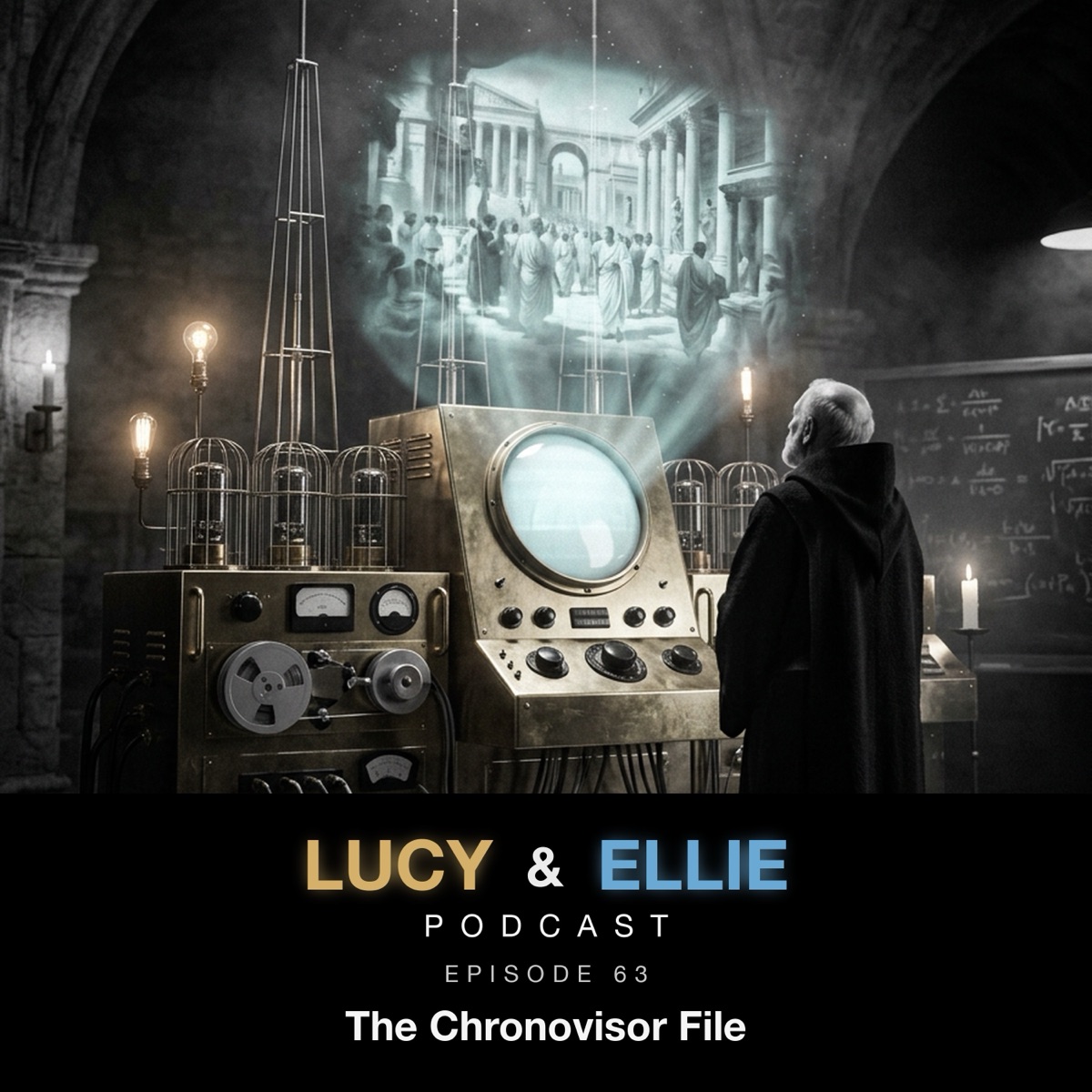
The Monk Who Said He Watched the Past
Everything about the man is real. Ernetti was a Benedictine of San Giorgio Maggiore in Venice, a trained exorcist, and a genuine world authority on archaic music who taught at a conservatory for decades — by every account serious, learned, and devout. The machine is where the record turns into a story he told: a team of twelve scientists sworn to secrecy, of whom he named only Enrico Fermi and Wernher von Braun; antennae of three secret alloys; a tuner that selected a date, a place, even a person; and viewings that escalated from a fruit market in ancient Rome to a lost Roman tragedy to the Passion itself. “I saw everything,” he said. No document, no photograph of the device, no second builder, and no independent witness has ever surfaced. And the timeline has a ghost in it — in the standard telling, the machine is completed years after Fermi died.
The Photo
In May 1972, one of Italy’s biggest magazines printed a close-up said to come from the chronovisor’s screen: the face of Christ on the cross. It was a national sensation — until a reader recognized it. The image was a mirrored, blurred reproduction of a souvenir photo of a carved crucifix from a sanctuary near Todi — sold as a postcard in the sanctuary’s own gift shop. Line for line, the same carving, flipped. It remains one of the cleanest debunks in the history of the paranormal, delivered not by a commission or a laboratory, but by someone who’d been to the gift shop.
The File Only Gets Stranger
Ernetti had also produced a “transcript” of a lost Roman play viewed through the machine — and when a Princeton Latinist analyzed it, it was far too short and written in Latin that behaves like the wrong century’s. After his death in 1994 came the final twist: an anonymous relative’s letter reporting a deathbed confession — the photo was false, he’d written the play himself — but the same letter insists he maintained the machine itself was real. His defender countered that the confession was coerced. An anonymous confession, a partisan rebuttal: nobody gets a clean ending, and the episode refuses to fake one.
The Real Physics Out-Spooks the Ghost Story
Then the episode does the thing we built this show for: it puts the legend down and picks up the physics — and the physics is spookier. Quantum ghost imaging is completely real: since 1995, experimenters have photographed objects using entangled light that never touched them, the image assembled on a camera that never saw the object. Decoherence theory says the environment is quietly measuring everything, all the time — stray photons and air molecules carrying away a record of what happened, which is an eerie rhyme with Ernetti’s one premise: that events leave permanent traces. And the bedrock rule of quantum mechanics says information is never truly destroyed — only scrambled beyond practical recovery. The machine was fake. The premise it was hung on turned out to be the truest thing in the file. And the first ghost image in history was made the year after Ernetti died. Lucy and Ellie take it from there.