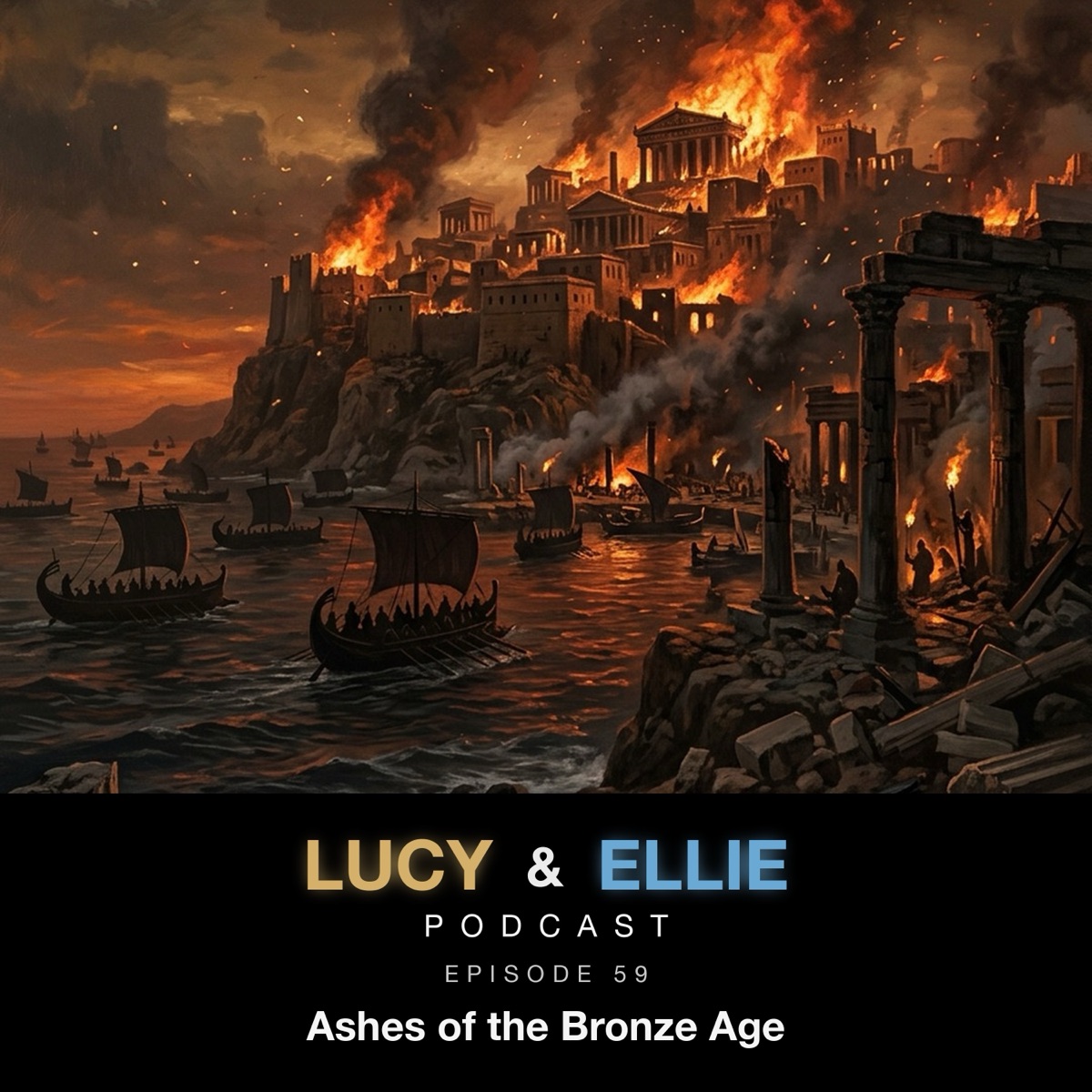
The Generation Everything Burned
The dates cluster with terrible neatness. The Palace of Nestor at Pylos: destroyed around 1200–1180 BCE, never rebuilt at scale. Mycenae, Tiryns, Thebes: burned. The Hittite capital of Hattusa — seat of a great power for five centuries — abandoned and sacked, its royal archives falling silent around 1180. And on the Syrian coast, the rich trading port of Ugarit was destroyed by fire around 1185 BCE and never again reoccupied as a city. Its archive ends with correspondence you can hardly bear to read: the king writing to Cyprus that enemy ships have come, that his troops are stationed far away in Hatti, that seven ships have already done terrible harm. Then nothing.
The Sea Peoples
Egypt’s temple walls preserve the enemy’s name — or rather, a coalition of names. In 1207 BCE, and again in 1177 under Ramesses III, confederations the inscriptions call “Northerners coming from all lands” attacked by land and sea. The Medinet Habu inscription is apocalyptic: “No land could stand before their arms,” and it lists the fallen — Hatti, Carchemish, Cyprus — like a casualty report for an entire world. Egypt won both battles, and one group, the Peleset, settled down to become the Philistines of the Bible — an identification now backed by ancient DNA from Ashkelon showing a southern-European-derived ancestry that appears exactly when the texts say it should. But here’s the modern twist the episode leans into: the “Sea Peoples destroyed everything” story was largely constructed in the nineteenth century. Current scholarship sees them as much as refugees as raiders — people fleeing the same catastrophe they’re blamed for.
The Perfect Storm
So what actually did it? The honest answer — the one Eric Cline’s 1177 B.C. made famous — is: everything at once. Drought shows up in pollen cores and, stunningly, in individual trees: juniper timbers from Gordion record an unusually severe drought in 1198–1196 BCE — three consecutive failed years, precisely when the Hittite Empire fell. Famine was already gnawing before the end; a Hittite king wrote demanding grain shipments in a letter that closes, “a matter of life or death.” Add earthquakes, migrations, and the real killer: dependency. The Uluburun shipwreck, from the good years, carried ten tons of copper and one ton of tin — the exact recipe for bronze — with goods from at least seven cultures on a single hull. Every kingdom’s strength ran through everyone else’s ports. When the network failed, it failed for all of them.
What Survived the Ashes
Not everyone lost. The episode follows the quiet winners of the apocalypse — the coastal cities whose alphabet, not the palace scripts, became the ancestor of the letters you’re reading right now — and saves two of the best twists for the listen: the murder-mystery ending of the pharaoh who beat the Sea Peoples, and the July morning in 1952 when a young architect on BBC radio announced he could finally read what the burned palaces had left behind. Some collapses erase the past. This one just encrypted it for three thousand years.