The Bird That Carries Whales
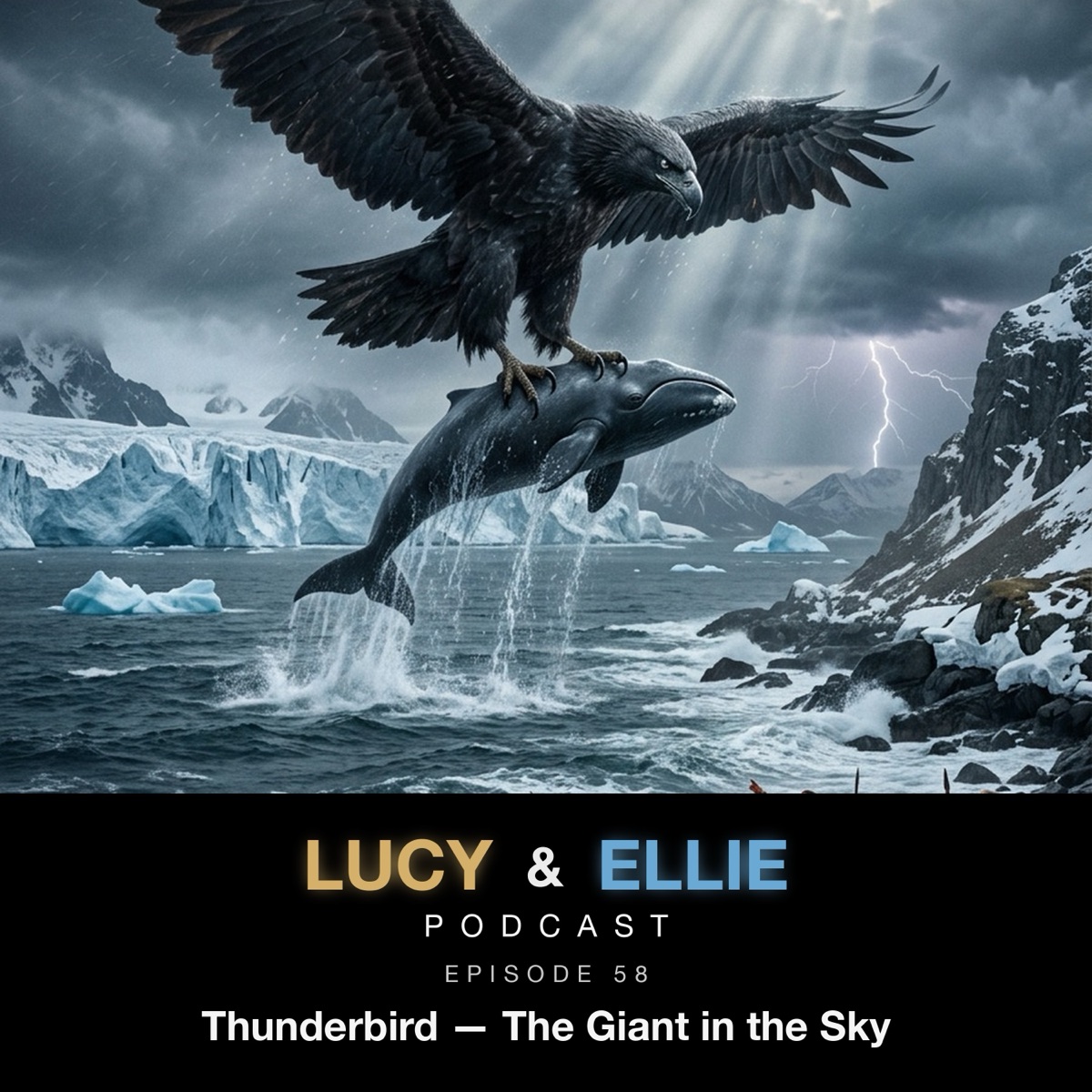
The Thunderbird is not one legend — it’s many, each nation with its own name and story. To the Anishinaabe it is Animikii, one of the most powerful spirits; to the Lakota, Wakinyan, a primary force of the cosmos. The core imagery recurs across the continent: thunder is the beat of enormous wings, and lightning flashes from the creature’s eyes. On Vancouver Island, Kwakwaka’wakw and Nuu-chah-nulth carvers cut the great scene into totem poles: Thunderbird diving from its mountain home to drive its talons into the back of Whale, the two locked in battle — a bird, in other words, that hunts the largest animal in the ocean.
The Story That Beat the Seismographs
For a long time, Western science filed those stories under mythology. Then a University of Washington team led by seismologist Ruth Ludwin compiled about forty Native stories from along the Cascadia coast — Thunderbird-and-Whale battles, floods, shaking earth — and found them consistent with a catastrophic subduction-zone earthquake and tsunami. Japanese archives supplied the timestamp: an “orphan tsunami” that arrived with no local quake, on the night of January 26, 1700. A magnitude-9 earthquake, remembered accurately for three hundred years, by cultures that never wrote it down. The wave arrived in Japan; the memory survived in the story of a bird.
The Fossil Record Answers
Then there are the actual giants. Argentavis magnificens, from Miocene Argentina, is the heaviest flying bird known — roughly 70 kilograms, wingspan around six meters — a master glider that rode thermals a mile or two upward without a single wingbeat and could cover a couple hundred miles in a day. But no human ever saw one: it vanished about six million years before our genus existed. The birds people did see are almost as staggering. Teratornis merriami — wingspan up to about 3.8 meters, a third bigger than any condor alive — survived to the end of the last Ice Age, and the La Brea Tar Pits have yielded more than a hundred individuals. Human footprints at White Sands, New Mexico date to 21,000–23,000 years ago. Do the overlap: the first Americans genuinely watched birds the size of small aircraft cross the sky — and its bigger cousin Aiolornis, at around five meters of wingspan, was up there too.
What Oral History Remembers
Stanford historian of science Adrienne Mayor has documented that Native peoples were finding and interpreting fossils — mammoths, pterosaurs, giant birds — long before European science existed, reasoning carefully about extinct life centuries before Darwin. On the episode, Lucy and Ellie hold the two records up to the light: where the legends and the fossils genuinely touch, where they don’t, and why the Thunderbird was never merely a misread bone. And then there’s the strangest file in the whole case — a famous photograph of a dead thunderbird nailed to a barn, vividly remembered by hundreds of people, that no one has ever been able to find. What that photo turns out to be says as much about human memory as any legend. Listen for that one.