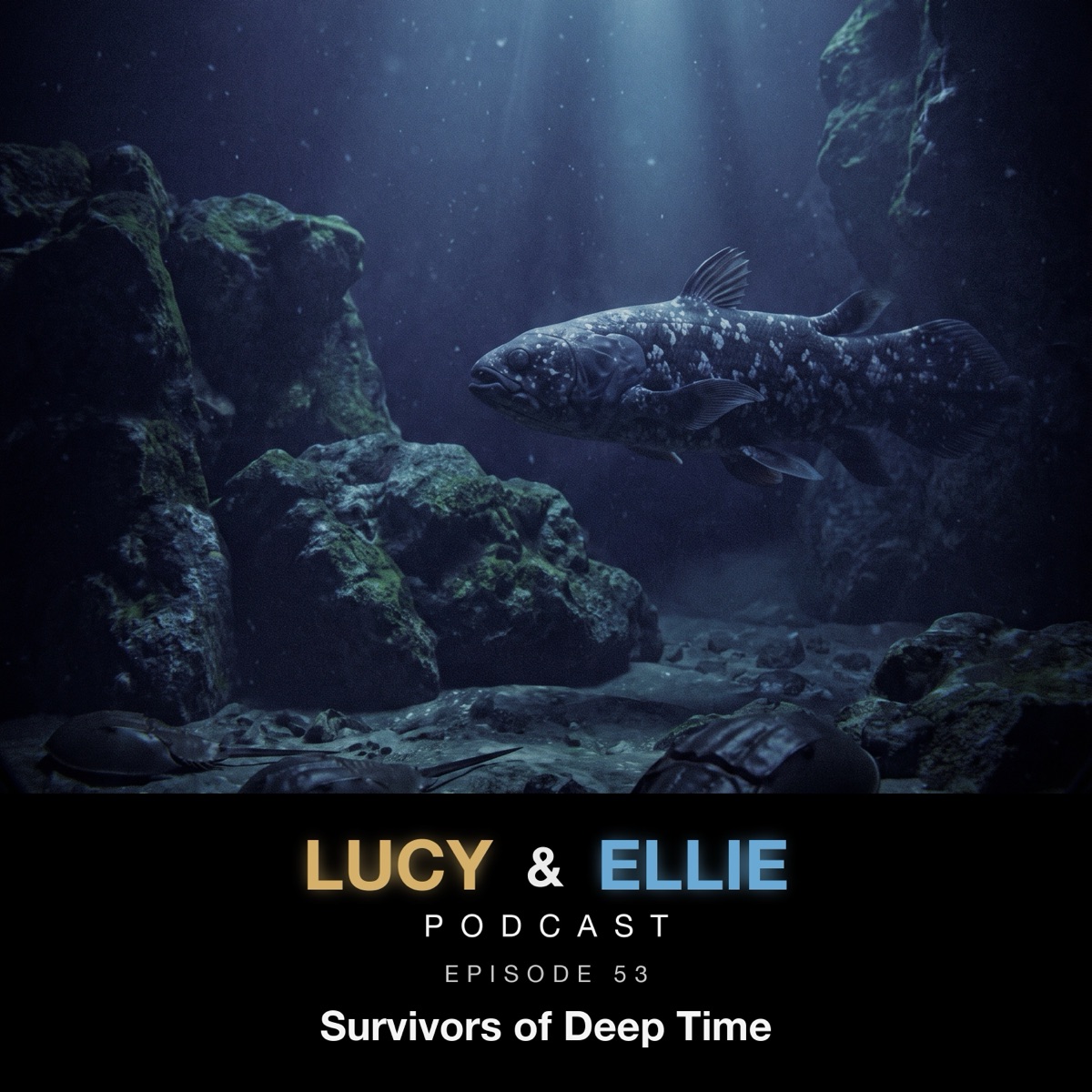
The Slowest and the Fastest, Two Lines Apart
In 2024, the journal Evolution published a study from the Near lab at Yale — "The genomic signatures of evolutionary stasis" — comparing 481 vertebrate species on the rate their exons change: the DNA that gets read to build proteins, where a mistake costs something. Gars came dead last, half an order of magnitude to three orders of magnitude slower than any other major vertebrate group — the slowest of any jawed vertebrate ever measured; the proposed mechanism, unusually effective DNA repair, is flagged for possible relevance to cancer and ageing research. The slowness has a spectacular consequence: alligator gar and longnose gar — genera that last shared an ancestor about 105 million years ago — are producing fertile hybrids and backcrosses in the wild in Texas and Oklahoma, the oldest naturally hybridizing divergence known among eukaryotes, nearly double the prior record (ferns, about 58 million years). That gap is more time than separates a listener from a tyrannosaur. Not stasis — compatibility.
In 2008, Trends in Genetics ran a paper titled "Rapid molecular evolution in a living fossil." Hay, Subramanian, Millar and colleagues read DNA out of tuatara bones up to 8,000 years old, compared it with living animals, and found a mitochondrial region changing faster than anything ever recorded in a vertebrate. One precision the coverage skips: it's a short-timescale, hypervariable-region estimate, and those run high, so the defensible sentence is "the fastest ever recorded, by that method." The authors' conclusion is the load-bearing part — molecular rates and body-plan rates are decoupled. An animal can be sprinting genetically while standing perfectly still to look at. Hold both papers at once: the slowest vertebrate ever measured and the fastest wear the same label. If one phrase covers both extremes, it was never a description of speed.
What Darwin Actually Wrote
Darwin coined "living fossil" in 1859, in Chapter 4 of On the Origin of Species, pointing at the platypus, a lungfish, and ganoid fishes — which are gars: the slowest animal in the Yale study is in Darwin's original list. But his mechanism was never that these animals stopped changing. His own words: such forms "inhabited a confined area" and had been "saved from fatal competition." Refuge, not stasis. The popular meaning is a corruption of the coinage.
The modern literature agrees on that much. A bluntly titled 2013 paper by Casane and Laurenti in BioEssays — "Why coelacanths are not 'living fossils'" — argues the morphological stability of coelacanths is not supported by paleontological evidence: "it hasn't changed" was an impression promoted to a fact. Or as Werth and Shear put it the following year: no species is exempt from selection.
What the literature does not agree on is whether to throw the term out. In 2018, Lidgard and Love argued in BioScience that the field should keep it — reframed as a flag marking what still needs explaining about stasis — and defended that position again in 2021. So: disputed, not settled. Anyone telling you scientists have abandoned the phrase has read one half of a fight.
Seventy Million Years of Silence — and a Fish Saved by Tasting Terrible
On 22 December 1938 — days before Christmas, not on it — museum curator Marjorie Courtenay-Latimer took a taxi to the East London docks in South Africa to look through a trawler's bycatch. On the deck of the Nerine was a metre-and-a-half fish with fins like limbs. J.L.B. Smith named it Latimeria after her and published "A living fish of Mesozoic type" in Nature in March 1939. The famous 66-million-year gap is wrong: that is the date of the asteroid, not a fossil date. The youngest coelacanth fossils, from Aude in southern France, are about 71.5 million years old — the honest figure is roughly 70–72 million years of silence. And there is no fossil Latimeria at all; the living genus has a fossil record of zero. The gap records a lineage missing from the rocks, not a fish surviving unchanged.
They also don't walk. Hans Fricke filmed them from a submersible in 1987, published in Nature: the paired fins are not used for locomotion along the bottom — the animal is a nocturnal drift-hunter. The fins do alternate 180 degrees out of phase, exactly a tetrapod's coordination, which is why everyone assumed walking. In 2021, growth rings read under polarised light showed prior ages underestimated fivefold: lifespan around 100 years, maturity at roughly 55, gestation about five years — the longest of any fish. It is Critically Endangered, and not our closest fish relative — 2013 genome work put lungfish there, while finding coelacanth protein-coding genes evolving at roughly half the tetrapod rate, a result attacked the same year. The body-stasis claim fails the fossil record; the molecular slowdown is still genuinely contested.
Then the reversal. Comorian fishermen had always known the fish — they call it gombessa — catching two or three a year and throwing them back, because the flesh is oily, urea-laden, and reportedly purgative. The fish was saved by tasting terrible. In 1952, Smith leafleted the East African coast with a £100 reward, turning a worthless nuisance into the most valuable catch in that ocean — and coelacanths began to be targeted. When Ahmed Hussein landed the second specimen on Anjouan on 20 December 1952, Smith telephoned Prime Minister D.F. Malan at home and got a South African Air Force Dakota sent for a fish — then misidentified it, naming a new genus, "Malania," after the man with the aeroplane, on the strength of a missing dorsal fin that was a healed injury.
Which Noun Are You Holding?
The nautilus's "500 million years" is three different ages wearing one coat: the first nautiloids appear around 500–515 million years ago, the order Nautilida around 400 million, and the genus Nautilus — the animal in the aquarium — about 35 million, roughly as old as the first whales. The horseshoe crab runs the same conflation: the oldest fossil, Lunataspis aurora from Manitoba, is 445 million years old, and surviving five mass extinctions is true of the order Xiphosura — while Limulus polyphemus, the species on American beaches, is far younger. Everyone quotes the oldest number in the family and lets you assume it belongs to the animal.
The nautilus itself is stranger than the myth. Its eye is a pinhole camera with no lens and no cornea — the retina is open to seawater, each photoreceptor covering more than two degrees of the world. It manages buoyancy through the siphuncle, living tissue threading every chamber, pumping salt out so water follows by osmosis. Below about 800 metres the shell implodes; above, warm water it can't tolerate — a vertical prison, which is why the shell trade could empty it so easily. The whole family went onto CITES Appendix II in 2016, and three new nautilus species were described in 2023 from Samoa, Fiji and Vanuatu. The "unchanged" group is actively speciating.
The horseshoe crab, meanwhile, is not merely related to spiders — it is an arachnid. A 2019 study in Systematic Biology analysed 53 taxa with whole genomes plus RNA sequencing, and every analysis recovered horseshoe crabs nested inside Arachnida — vindicating E. Ray Lankester, who placed them with spiders in 1881 and was overruled for roughly 140 years. Even the golden-spiral legend fits the pattern: the nautilus shell is genuinely logarithmic, but 80 Smithsonian shells averaged 1.310, not 1.618, and the values vary. We keep painting tidy, timeless perfection onto old animals, and the measurements keep coming back messier and more alive.
The Blue Blood Debt
Horseshoe crab blood is blue because of copper-based hemocyanin, but that is not the medically valuable part. The value is a cell floating in it — the amebocyte — which clots instantly on contact with bacterial endotoxin. Frederik Bang and Jack Levin at Woods Hole turned that into the LAL test, FDA-approved in 1977 to replace a test using live rabbits. Essentially every injectable drug, vaccine and implantable device must be tested for endotoxin, and for decades this has been the standard method — not the only legal one, but the method.
The cost has numbers. In 2022, about 911,826 crabs were collected for bleeding in the United States, up to roughly 30 percent of blood volume drawn through the membrane around the heart. The regulator's mortality figure is 15 percent, range 4 to 30 — about 145,000 deaths in one year, before counting sublethal harms like disorientation and reduced female spawning. The exit exists: a recombinant enzyme does the same job with no animal in the loop. The US Pharmacopeia declined it full status in 2020, then made General Chapter <86> official in 2024 — estimated to cut demand for crab blood by roughly 90 percent, on the order of 100,000 fewer deaths a year in North America. Meanwhile the ASMFC set a zero-female harvest for 2025, citing the red knot, the shorebird that fattens on horseshoe crab eggs.
And there is a second debt. The 1967 Nobel Prize in Physiology or Medicine went to H. Keffer Hartline, largely for work on Limulus eyes: lateral inhibition, neighbouring photoreceptors suppressing each other so the response is strongest where the light changes — edge detection, the basis of how your visual system finds outlines and of computer vision. The same animal is in every vaccine vial and in the theory of how you see edges, and it was bled over 900,000 times in a year.
Henry, the Mahabali Frog, and the Coelacanth That Never Existed
The tuatara is not a lizard and not a dinosaur — it is the sole living member of Rhynchocephalia, an order that split from lizards and snakes about 250 million years ago. Its third eye is real but qualified: a parietal eye with its own retina, lens and cornea, visible in hatchlings, scaled over in adults — a light meter for the pineal gland, not an image-former. Its sex determination is inverted: warmer nests give males, with the switch around 21–22 degrees Celsius, so a warming world pushes populations toward all-male. Its genome, published in Nature in 2020 by a University of Otago team, is about 67 percent larger than a human's, shows selection on DNA-damage-repair genes, and was co-designed with Ngātiwai, the iwi who are kaitiaki — guardians — of the tuatara: a landmark in Indigenous data governance. And then there is Henry of the Southland Museum: resident since 1970, aggressive and celibate for decades until keepers removed a tumour, after which he mated with Mildred and became a father in 2009 at 111 — twelve eggs, the oldest reptile known to reproduce.
The purple frog, Nasikabatrachus sahyadrensis, was described from Kerala in October 2003 by S.D. Biju and Franky Bossuyt — not just a new species but a new family, though its juvenile had sat unconnected in the literature since 1917, hidden for 86 years. Its closest relatives live in the Seychelles, 3,000 kilometres away, because the ocean arrived after the frogs did — the split is estimated in a range of roughly 120 to 80 million years ago. It spends nearly all year underground eating termites, surfacing about two weeks a year in the pre-monsoon rains; its tadpoles cling to rock behind waterfalls for around 120 days, where they are harvested by being swept off with brooms. It is Endangered, an EDGE species, with work led by Sandeep Das since 2017 — and 2024–25 surveys in the Nelliyampathy Hills recorded mass mortality: 185 sightings, 100 live tadpoles, 75 dead. Locally it is the Mahabali frog, named for the king allowed back from the underworld once a year.
The episode's most uncomfortable segment is a fake: in April 2025, a wildlife site claimed an ROV had filmed a coelacanth 80 miles off San Diego. Entirely fabricated — no names, no images, no checkable date — debunked by science writer Sharon A. Hill, confirmed false by Scripps, and traced partly to a clearly labelled speculative-fiction "California reef coelacanth," syndicated onto MSN. The real news is better anyway: in October 2024, divers on rebreathers photographed a living Latimeria menadoensis at 144 metres in North Maluku — the first in-situ images by human divers, the white-spot pattern confirming the same individual on two days, because the spots are fingerprints. And the closing thesis belongs to the listener who requested the episode: evolution isn't a race to become the most advanced — it's a race to find a niche so stable the chaotic, changing world can never touch you. These animals weren't holding still. They were being left alone, which is a completely different thing, and much harder to arrange.