The Space Fact That Was Wrong Before Space
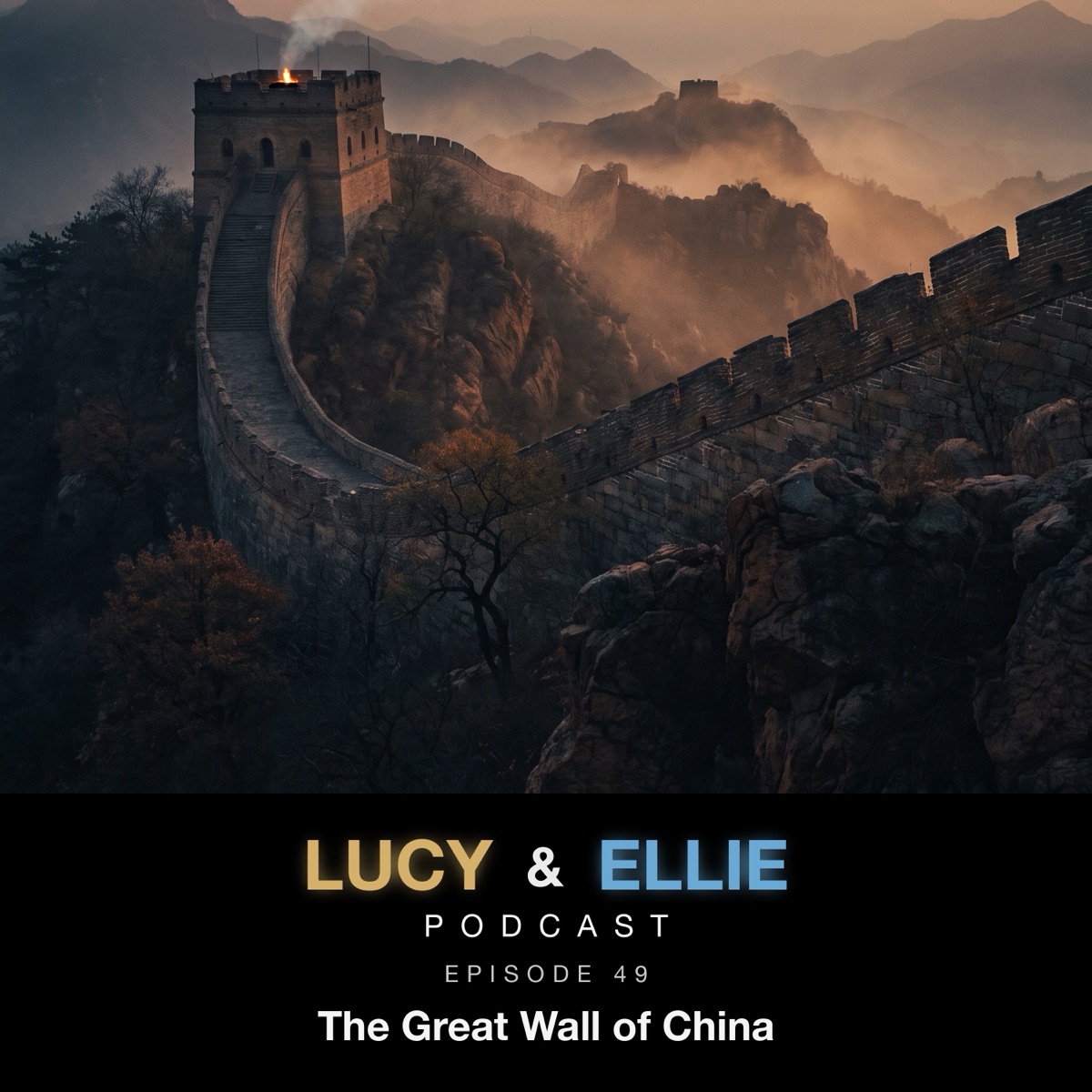
The claim is that the Great Wall is the only human-made object visible from space with the naked eye. It's wrong at every level: not visible from the Moon, and not reliably visible from low Earth orbit with the unaided eye either. The reason is width, not length. The wall is only a few meters across — from orbit, roughly a single hair seen from across a football field, in exactly the color of the dirt it's lying on, because it was built out of local earth and stone. Straight highways and airport runways are wider and easier to spot, and nobody made a fun fact out of those.
The strange part is the timeline. In 1754 the English antiquarian William Stukeley wrote that the wall "may be discerned at the Moon," before anyone had flown anything at all. A 1932 Ripley's Believe It or Not cartoon printed the claim and it spread the slow, old-fashioned way for decades.
Then people actually went and checked. Neil Armstrong said it is definitely not visible from the Moon; Jim Lovell called the claim absurd; and when China sent its first astronaut up in 2003, Yang Liwei came home and reported that no, he couldn't see it. The first verified photograph of the wall from orbit wasn't taken until 2004, by astronaut Leroy Chiao on the space station — and even he wasn't sure he'd captured it, having used a 180 mm telephoto lens.
Twenty-One Thousand Kilometers — and Why You Can't Walk It
For most of history nobody knew how long the wall was; people estimated, then repeated older estimates. Then China ran a five-year archaeological survey, finished in 2012, with boots on the ground and satellites overhead. The number came back at 21,196.18 kilometers — more than half the equator. And it counted more than forty thousand separate pieces: walls, watchtowers, forts and trenches, built by different dynasties, overlapping, branching and doubling back.
So "the Great Wall" isn't a wall. It's a family of walls that all got the same last name. The one everyone pictures — gray brick running along green mountains — is the Ming wall, about 8,851.8 kilometers of it, and roughly six hundred years old. The classic Ming stretches run about six to seven meters tall, up to around fourteen where there's a watchtower, and about six and a half meters wide at the base: wide enough on top to march soldiers five across or move horses and carts. The wall was also a road.
You cannot walk it end to end, because there is no end to end. It's discontinuous — gaps, dead ends, parallel walls that never connect — and about a third of the whole thing has simply vanished: eroded, buried under sand, farmed over, or carried off brick by brick to build houses and pigpens. What's left runs through deserts, up sheer mountains and along cliff edges. People have hiked huge connected stretches over months; the full unbroken walk doesn't physically exist.
Who Actually Built It: A Relay Race Across Two Thousand Years
Long before a unified China, the rival kingdoms of the Warring States threw up walls of rammed earth — packed dirt, pounded solid, layer by layer — to keep each other out. Then in 221 BC one man won: Qin Shi Huang, the first emperor. He didn't build the Great Wall so much as merge it, ordering the walls facing north connected and extended into one, a project driven by his general Meng Tian with an army of conscripts. The Han then built the most total length, pushing west to guard the Silk Road, and the Ming (1368–1644) laid the brick wall tourists photograph today.
The Ming mixed their mortar with sticky rice porridge; the starch makes an extraordinarily tough binder, and it's part of why Ming sections still stand while older walls dissolved. They caulked an empire with congee.
The point of it was never to be unclimbable. The threat in the north was the Xiongnu — horse nomads who could sweep down, take grain, livestock and people, and be gone before an army could form. A person can climb a wall; a horse can't, and neither can forty stolen cattle. The wall didn't stop the raider, it stranded him on the wrong side with everything he came to steal. On top ran beacon towers — smoke by day, fire by night — passing a warning tower to tower faster than any rider could carry it, with some accounts saying the number of smoke columns signalled the size of the incoming force. And it was a border: gates, passes, customs, taxing the trade moving in and out.
What It Cost
Nobody knows the true toll. There was no census of the dead. Across the dynasties the labor force ran into the hundreds of thousands at a time — conscripted peasants, soldiers and convicts sent to the frontier as punishment — working in brutal cold and heat, far from home, for years. For the Qin push specifically, a figure of around 400,000 deaths gets repeated; mark it as an estimate, not a proven fact. Even the cautious version is enormous, and the epithet "the longest cemetery on Earth" stuck for a reason, though it's a phrase, not a survey.
One thing that is not true: the wall is not full of bodies, and the mortar is not made of ground-up bone. Archaeologists have found workers' cemeteries alongside the wall, but there's no evidence bodies were built into it as material. The graves beside it are very real. The ghost story isn't.
China holds the grief of it in one of its four great folktales, Meng Jiangnu. A newly married woman's husband, Fan Xiliang, is seized days after the wedding and marched off to build the wall. Winter comes with no word, so she makes warm clothes and travels a long, hard way to bring them herself — and arrives to learn he is already dead, worked to death, his body buried somewhere in the wall with no grave and no marker. She weeps for three days and three nights until a section of the wall, four hundred kilometers of it, collapses and the bones of the dead spill out. It isn't history; there was no magic collapse. But there's still a temple to Meng Jiangnu standing near the eastern end of the wall.
The Buried Army and the Tomb Nobody Will Open
In 1974, near Xi'an in Shaanxi province, farmers digging a well during a drought hit pieces of hard fired clay about three meters down. One of them, Yang Zhifa, pulled up a life-size terracotta head. They had punched a well straight into roughly eight thousand life-size soldiers, around 130 chariots and 670 horses, buried in battle formation — with no record of it in any surviving history. Every face is different: features, expressions, hairstyles, mustaches, ages, with generals standing taller, and some scholars think they were modeled on real soldiers. They were also originally painted in brilliant color; the pigment survives underground but curls and flakes within minutes of hitting dry air, so some of it was lost as archaeologists watched. That's why excavation now moves painfully slowly, sometimes pausing for years to wait for better technology.
The soldiers are the honor guard, not the tomb. About a kilometer and a half away is an artificial mound, and under it the tomb of Qin Shi Huang himself — sealed, never opened, in two thousand years. Almost everything we think is inside comes from the historian Sima Qian, writing about a century after the emperor died: an empire in miniature, palaces and towers, the heavens on the ceiling with pearls for stars, and the great rivers recreated in flowing mercury.
Everyone assumed the mercury was poetic exaggeration. Then people tested the soil over the mound and found levels many times the natural background; a study a few years ago used laser radar to measure mercury vapor coming off the mound, consistent with a very large buried source, with estimates running to a hundred tons or more. Last year researchers think they traced the cinnabar ore itself to a region called Xunyang — reverse-engineering an emperor's supply chain two thousand years on. There are three good reasons the door stays shut: a tomb possibly flooded with a deadly neurotoxin, the lesson of the paint that vanished the moment air reached it, and the honest admission that the technology to excavate it without wrecking it may not exist yet. Meanwhile the site keeps handing over new pages — in late 2024, archaeologists unearthed a rare senior commander figure in Pit Two, the first such officer found there since digging began in 1994.