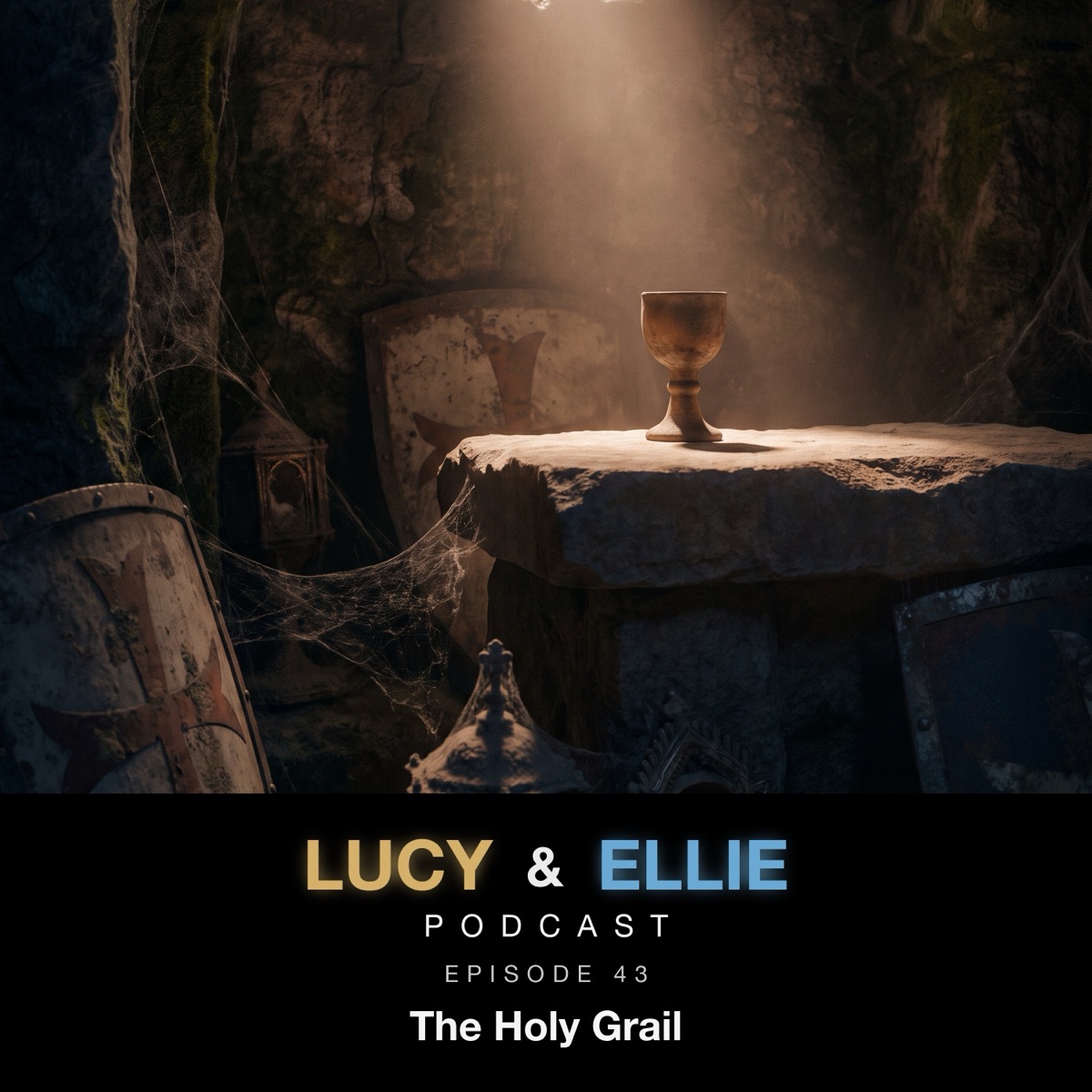
Where the Grail Was Really Born
Here's the first strange thing: the most famous relic in the world appears nowhere for roughly eleven hundred years after Jesus. Then, around 1190, it shows up in a French poem by Chrétien de Troyes — not as a chalice, but as a serving dish gliding through a candlelit hall. The poet died before he could explain it, leaving the story on a cliffhanger. It was the next writer, Robert de Boron, who welded the cup to the Last Supper and turned a mystery object into the cup of Christ. The Grail wasn't handed down from the ancient world. It was invented, on the page, and we've been chasing it ever since.
The Powers People Swore It Had
Once the legend caught, so did the miracles. A Grail that feeds the starving. A Grail that heals a dying king and keeps a wounded land from rotting. And in one German version — Wolfram von Eschenbach's Parzival — it isn't a cup at all, but a stone that stops you from aging. Lucy and Ellie walk the honest gap between "a cup of the right age" and "the cup He held," and why that gap is exactly where a thousand years of belief rushed in.
The Ones Who Swore It Healed Them
In Ellie Unfiltered, the mystical side: the Welsh Nanteos Cup, a battered wooden bowl real families borrowed to nurse their sick — leaving a deposit behind as collateral, and biting off splinters as keepsakes until the thing was chewed half to pieces. It's the tender, human core of the whole legend: people didn't need it to be real to need it to work.
The Templars, the Hoax & Where It Stands Today
Then the conspiracies. Why everyone insists the Knights Templar found it and hid it — an idea that comes almost entirely from that same German poem, with no historical evidence behind it — and the confessed hoax that gave us the Da Vinci Code bloodline. In Rumors & Whispers: a filmmaker who says he's found the exact grave and won't say where until the permit clears, and a skeleton cradling a cup in the real Indiana Jones canyon. And finally, where the story stands now: Napoleon breaking one, the Met quietly walking one back, León building a Grail hiking trail, and Valencia running a live Holy Year around a cup of exactly the right age — one that two popes have lifted at the altar.