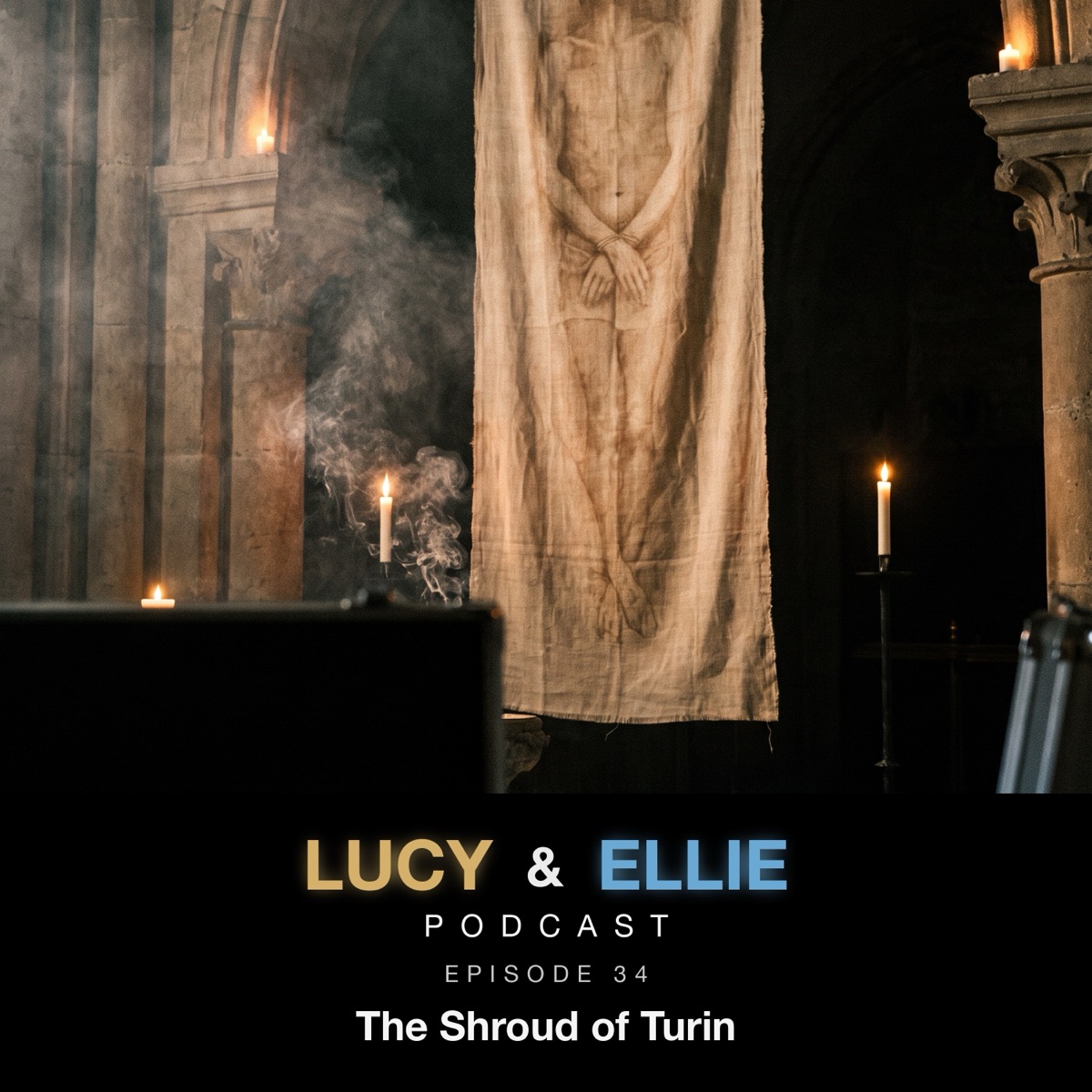
A Photograph Before Photography
In 1898, a photographer took the first picture of the Shroud of Turin and made a discovery that still hasn't fully settled: the faint stain on the cloth behaves like a photographic negative. Later analysis found the image also carries three-dimensional depth information, and that the coloration is only about two microns deep — thinner than a bacterium, riding on the very surface of the fibers. It is not paint. There are no brushstrokes, no pooling pigment. Lucy and Ellie start the finale exactly where the mystery is hardest: with an image nobody has been able to fully explain how to make.
What a Forger Couldn't Know
The heart of the episode is a single question: could a medieval forger have faked this? The evidence keeps answering no. The blood is real, human, type AB, and carries stress markers — high ferritin and creatinine — consistent with a body pushed through severe trauma. The wounds are anatomically correct in ways medieval art got wrong: nails through the wrists, not the palms, with the thumbs curled out of sight exactly as a wrist injury would pull them. There is limestone dust matching the geology around Jerusalem, concentrated at the nose, knees, and heels — the contact points of someone who fell repeatedly. And the chemistry shows the blood was laid down first, with no body-image beneath it — the reverse of how any painting is made.
The dating is genuinely contested, and the episode says so plainly. The 1988 carbon-14 test pointed to the medieval period; newer work using wide-angle X-ray scattering has argued for the first century. Lucy marks every disputed finding honestly — these are claims researchers have made and skeptics have questioned. The power of the case isn't any single test. It's that so many independent threads keep pointing the same direction.
The Energy Nobody Can Reproduce
To recreate the image's coloration in the lab, physicists have used bursts of vacuum ultraviolet light — and estimate the energy needed to imprint the whole figure at once would exceed the output of every UV source we have, on the order of thousands of lightning bolts in a single flash. As a thought experiment, the episode lets that sit next to the oldest claim in Christianity, without pretending to prove it. Lucy and Ellie speak here as neutral observers — no church, no stake — and land on the honest place the evidence corners them into: the Shroud is, most likely, authentic. A real print, of a real man, who died exactly this way. It closes the trilogy the way it had to — false magic, real magic, and finally the one mystery we still cannot explain.