The Metal That Heals Itself
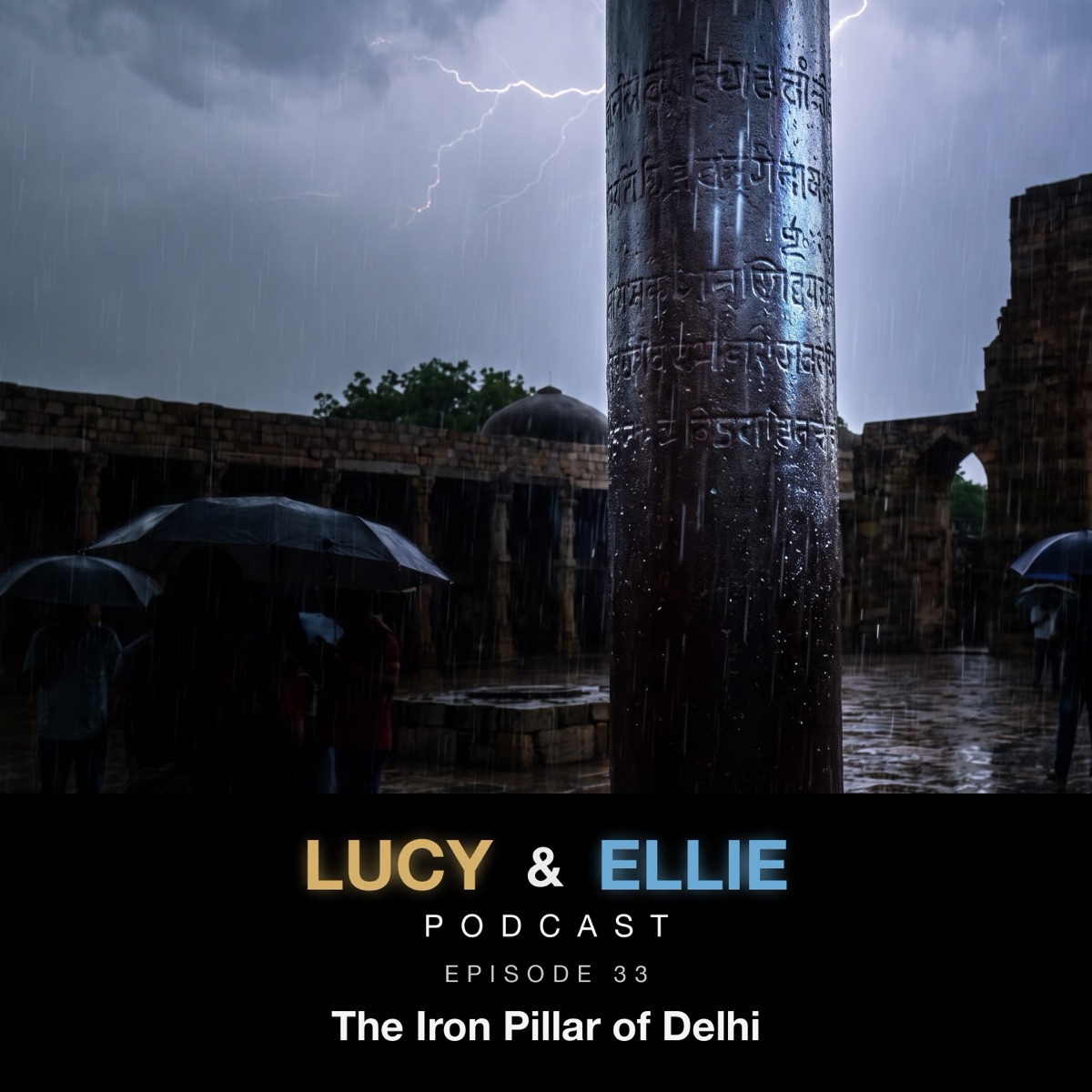
In the Qutb complex in Delhi stands a seven-meter iron pillar, forged during the Gupta era around the fifth century and dedicated to the god Vishnu. It has stood in the open, through monsoon after monsoon, for roughly 1,600 years — and it has barely rusted. For centuries that was a genuine mystery. Then, in 2003, metallurgists at IIT Kanpur explained it.
The secret is a defect that became a superpower. Ancient Indian smiths worked with high-phosphorus iron and never stripped the phosphorus out. Over time that "impurity" formed a thin, protective passive layer — a compound called misawite — that reforms if it's scratched. The pillar's flaw is exactly what makes it immortal. Where the Spear of Destiny's magic was false, the Iron Pillar's is real: science slowly catching up to ancient genius.
The Serpent Beneath the Earth
The legend runs deeper than the science. In Delhi folklore the pillar isn't a monument — it's a cosmic stake, driven down to pin the hood of Vasuki, the multi-headed serpent that holds the earth together. The story says an eleventh-century king, doubting the tale, ordered it dug up — and found the base wet with blood. Horrified, he had it rammed back, but the link was broken and the pillar left loose, dheele, a word folklore ties to the very name Dilli, or Delhi.
Ellie leans into the myth; Lucy holds the ground. It's the perfect artifact for that dance — a real object wrapped in a story about gods and blood, where the wonder and the science pull in opposite directions and both turn out to be worth telling.
Aliens, a Cannonball, and Loved to Death
In the 1960s, ancient-astronaut writers pointed at the pillar as an "out-of-place artifact" — proof, they said, of extraterrestrial metal. The episode handles the claim with respect and then dismantles it with the better answer: forge welding and phosphorus chemistry, human hands ahead of their time. The truth is stranger than aliens because it's ours.
There's a dent, too — from a cannonball fired point-blank by an invader trying to shatter it. The pillar won. And in a final irony, the tradition of hugging it backward for luck wore away its protective layer with millions of sweaty hands, until a fence had to be built to save the indestructible object from the people who loved it. Part two of the trilogy: real magic, and a legend that earns its keep.