The Storage Problem No One Thinks About
Modern civilization runs on fragile memory. Hard drives fail. Cloud accounts disappear. File formats decay. Even major institutions quietly lose data through neglect, cost cutting, and technological churn. The digital age feels permanent until you ask how much of today's knowledge will still be readable in five hundred years.
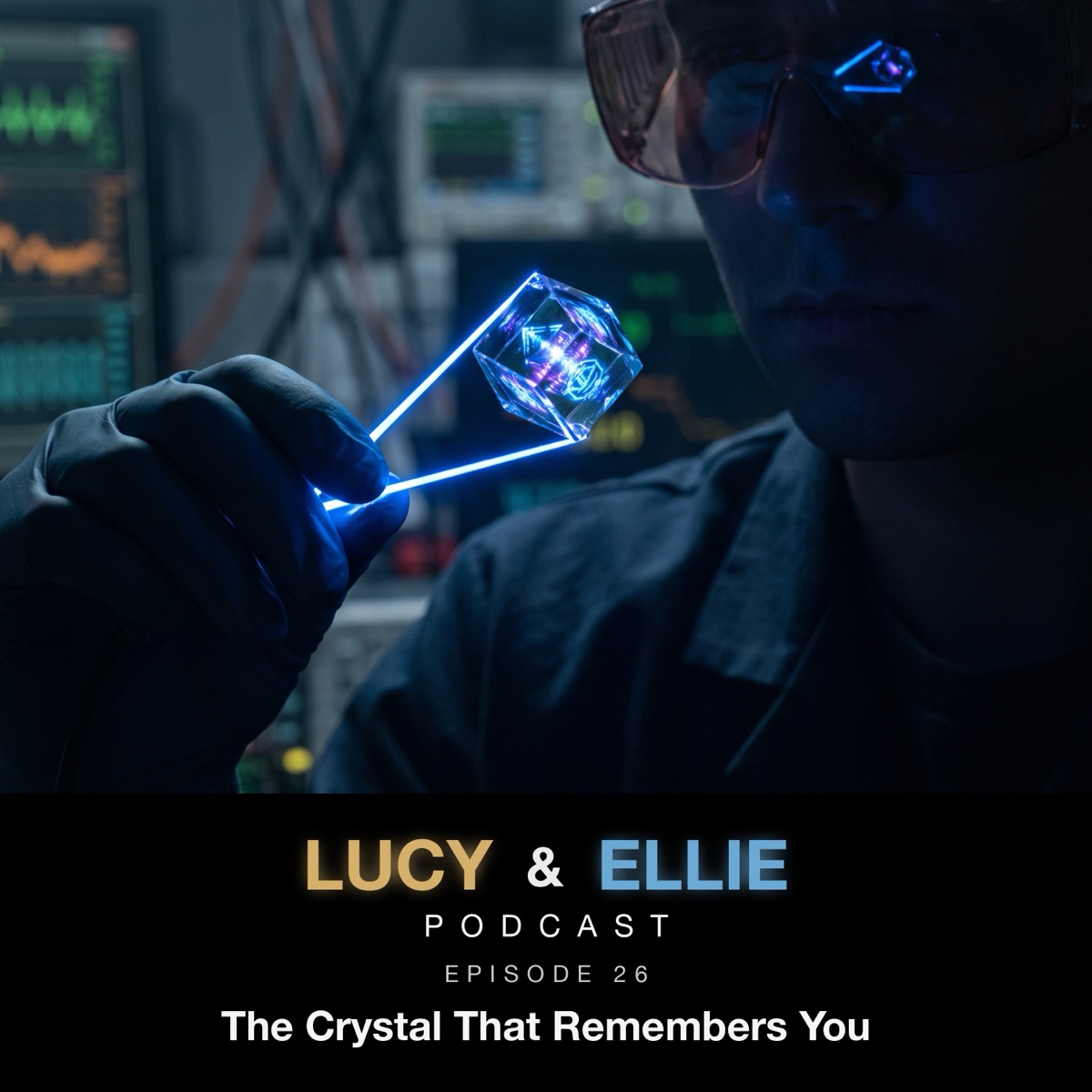
That is what makes crystal storage so compelling. Scientists have already demonstrated forms of 5D optical data storage in fused silica glass, using lasers to etch information into structures smaller than the eye can see. Under the right conditions, that data could survive for extreme spans of time without power, moving parts, or routine maintenance.
Why a Crystal Changes the Conversation
Traditional storage is built for speed and convenience. Crystal storage is built for endurance. Instead of asking how fast information can move, it asks how long meaning can survive. That makes it useful not just for science labs and archives, but for the oldest human question of all: what do we leave behind?
If human knowledge can be written into a near-permanent medium, then memory stops being a short-term technical problem and becomes a civilizational design choice. Who decides what is worth saving? Which languages get preserved? What parts of us deserve to outlast us?
The Dream of an Immortal Archive
Researchers have already discussed storing books, scientific libraries, legal records, and even genomic information in glass. The appeal is obvious: a record that survives floods, EMPs, power failure, and the ordinary entropy that quietly erases digital life. It is not science fiction. It is an engineering path that already exists in prototype form.
Lucy and Ellie push the question further. If memory becomes nearly permanent, are we building a backup system or a kind of secular immortality? A civilization that can speak across millennia is doing more than storing files. It is reaching into the future and asking to be remembered accurately.
What This Means for Us Now
The episode lands on a simple but unsettling point: preservation is never neutral. Every archive is also an act of selection. Crystal memory may one day preserve astonishing amounts of knowledge, but it will still reflect what we valued enough to save. In that sense, the technology becomes a mirror.
The crystal remembers. The harder question is whether we will choose wisely enough to deserve that kind of memory.