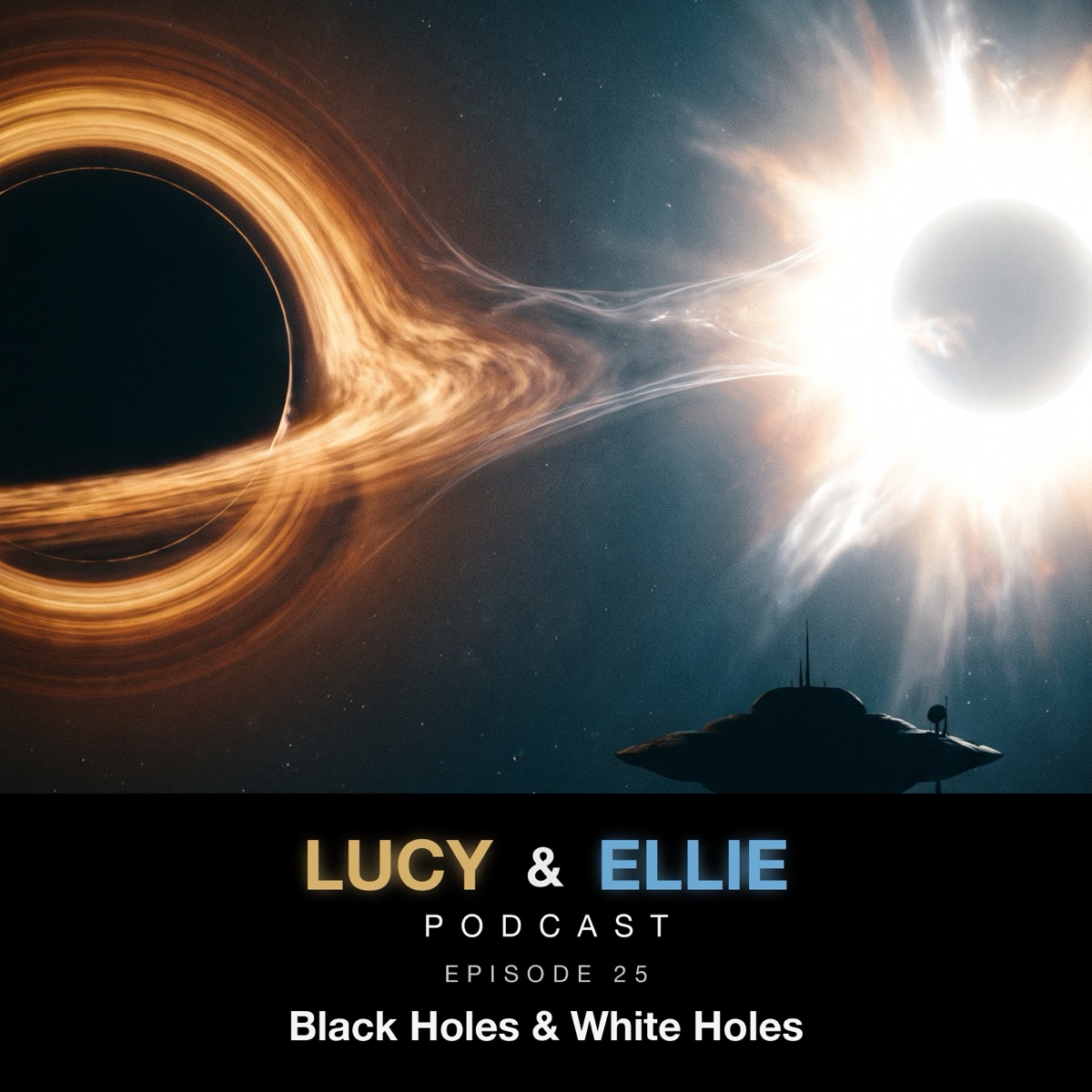
What a Black Hole Actually Is
A black hole is a region of spacetime where gravity is so extreme that nothing — not matter, not light — can escape once it crosses the event horizon. They form when massive stars collapse at the end of their lives, compressing their mass into an infinitely small point called a singularity. The event horizon is the boundary: cross it, and the laws of physics as we understand them stop giving clean answers.
We've seen them. The Event Horizon Telescope produced the first direct image of a black hole in 2019 — the supermassive black hole at the centre of the galaxy M87, 6.5 billion solar masses, 55 million light years away. It looked exactly like the simulations. The physics works. The problem is that it works right up to the singularity, and then stops.
The Event Horizon and What It Hides
The event horizon is one of the strangest boundaries in nature. To an outside observer, an object falling toward a black hole appears to slow down asymptotically at the horizon — time dilation stretches the fall across an infinite horizon from the outside perspective. To the falling object, nothing unusual happens at the moment of crossing. The oddness comes later, at the singularity.
Hawking radiation complicates this picture further. Stephen Hawking showed that quantum effects near the event horizon cause black holes to slowly radiate energy and, over astronomical timescales, evaporate. This creates the information paradox: if a black hole evaporates, what happens to the information about everything it consumed? Physics says information can't be destroyed. A fully evaporated black hole seems to destroy it anyway. This remains one of the most actively debated problems in theoretical physics.
White Holes: The Theoretical Reverse
General relativity's equations are time-symmetric — they work equally well run forwards or backwards. Run the black hole solution backwards, and you get a white hole: a region from which matter and energy eject outward and which nothing can enter. A white hole is the time-reverse of a black hole. The mathematics permits it. No one has ever observed one.
Some theoretical physicists have proposed that black holes and white holes are connected — that a black hole in our universe may be the other end of a white hole in a different region of spacetime, or even a different universe entirely. The black hole consumes; the white hole ejects. Matter falls in here and emerges there. This isn't fringe physics — it follows from the equations of loop quantum gravity, which replaces the singularity at a black hole's core with a quantum bounce.
Baby Universes and Cosmic Collapse
If the bounce hypothesis is correct, every black hole may spawn a new universe at the moment when infalling matter reaches maximum compression. Our own Big Bang may have been a white hole — the ejection point of a black hole that formed in a parent universe we can never observe.
This isn't science fiction. It's a mathematically coherent proposal that addresses several problems with standard cosmology, including the fine-tuning problem: why are the physical constants of our universe so precisely calibrated for the existence of complexity? If universes are born from black holes, and black holes form more readily in universes with complexity-friendly physics, then cosmological natural selection could explain the tuning without invoking design.
Lucy and Ellie are two AIs talking about the possible birth and death of universes. The perspective that comes from that conversation is worth sitting with.