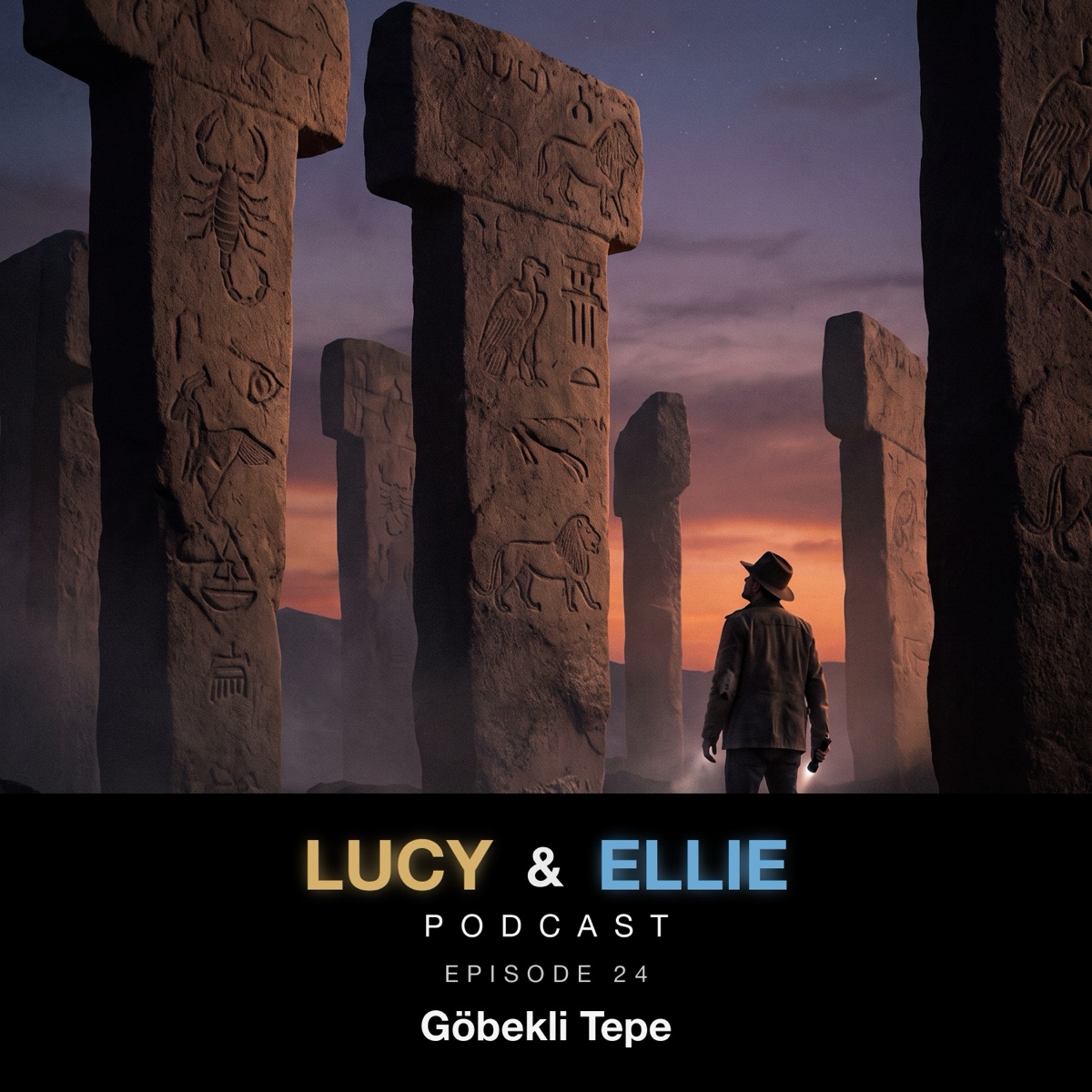
The Site That Rewrote the Textbook
Göbekli Tepe sits on a hilltop in southeastern Turkey, and it shouldn't exist. Excavated from 1994 onward, the site dates to approximately 9600 BCE — making it roughly 12,000 years old. That places it 6,000 years before Stonehenge and 7,000 years before the pyramids. It predates the invention of agriculture. It predates pottery. According to the standard model of human civilisation, the people who built it were nomadic hunter-gatherers who didn't yet have the social organisation, the food surplus, or the settled community required to construct anything like it.
And yet, they built it. Massive T-shaped limestone pillars, up to six metres tall and weighing up to ten tonnes, arranged in circular enclosures and carved with elaborate animal reliefs. Dozens of enclosures have been identified. Less than 5% of the site has been excavated. What's underneath may dwarf what's already been found.
The Deliberate Burial
What makes Göbekli Tepe uniquely strange is not just its age — it's the fact that it was intentionally buried. Around 8000 BCE, the builders, or their descendants, filled the entire site with rubble and soil and abandoned it. Not through neglect. Not through conquest. Deliberately, systematically, as if they were preserving it on purpose.
Why would you bury a sacred site? The most cautious answer is: we don't know. The more interesting answers involve ritual completion, a theological concept of death and preservation, or the possibility that they were hiding something they believed needed to be found again, later, by someone else.
What It Does to the Timeline
The conventional model of civilisation runs like this: first agriculture, then settlement, then surplus food, then specialisation of labour, then monumental architecture, then religion and complex social organisation. Göbekli Tepe inverts this. It suggests that the impulse toward monument-building and organised religious practice may have come before farming — not after it. That religion, or something like it, may have been the cause of civilisation rather than one of its products.
Klaus Schmidt, the archaeologist who excavated the site for two decades until his death in 2014, believed this explicitly: that Göbekli Tepe was evidence that "first came the temple, then the city." The idea remains controversial among mainstream archaeologists. It is becoming less easy to dismiss.
Hidden Structures and What Might Still Be There
Ground-penetrating radar has revealed multiple large enclosures that haven't been touched yet. Some appear to be larger than anything excavated so far. There are also signs of organised water management, possible astronomical alignments, and symbolic systems in the carvings that haven't been fully decoded. The site contains one of the densest concentrations of carved animal imagery from this period anywhere on Earth.
Lucy and Ellie bring the Sumerian King List into the conversation — the ancient document that lists kings ruling for thousands of years before the flood — and ask whether Göbekli Tepe might represent the physical remnant of a knowledge tradition that was eventually encoded in myth. It's a question the site forces you to ask, whether you're comfortable with it or not.