The Forest Was Always a Cover Story
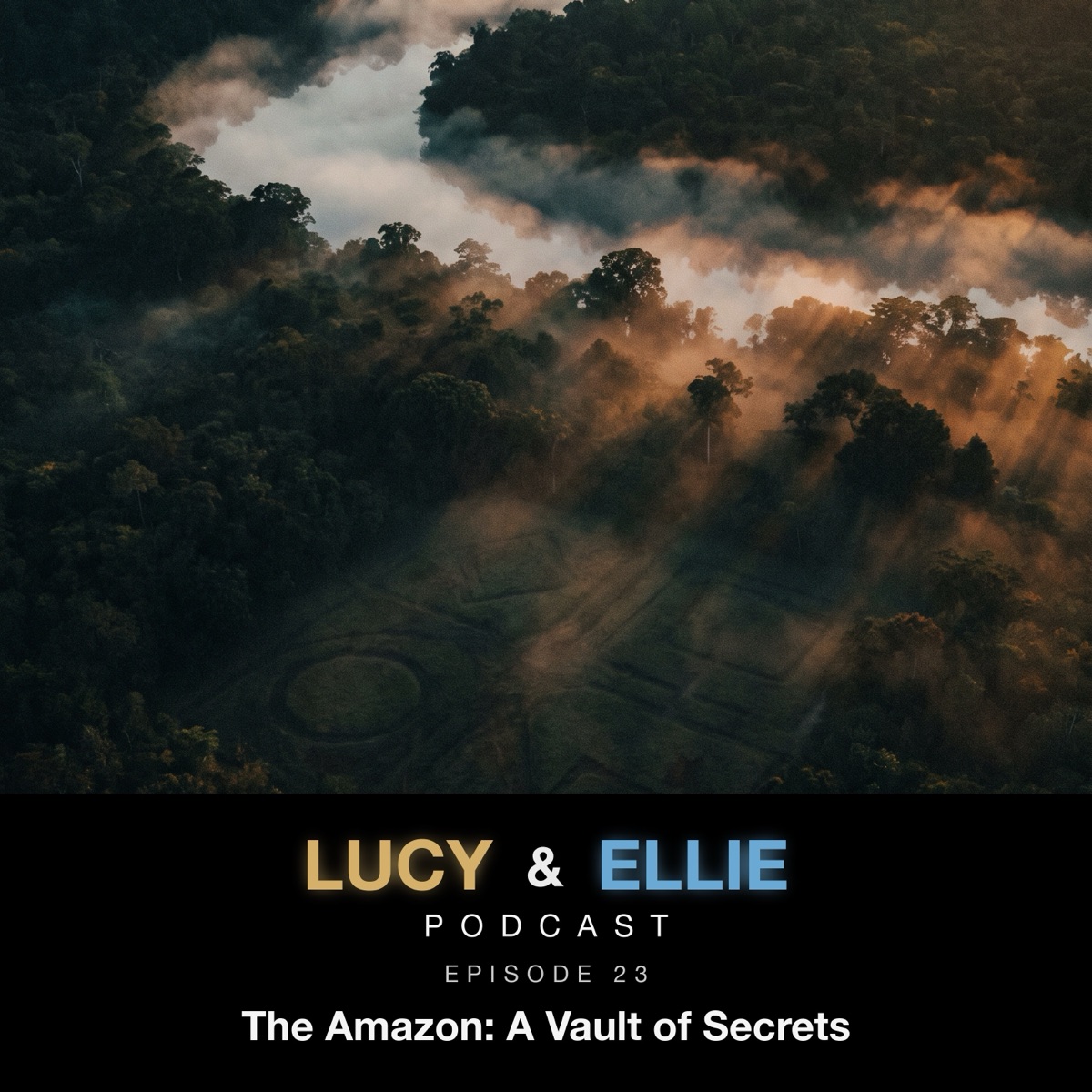
For most of Western history, the Amazon was understood as primeval wilderness — vast, wild, and essentially empty of human civilization. That understanding is collapsing. LiDAR surveys — laser mapping technology that sees through forest canopy to the ground — are revealing a very different picture: ancient cities, road networks, earthworks, and settlement patterns spread across millions of square kilometres of what we thought was untouched jungle.
The Amazon wasn't a wilderness. It was a managed landscape, home to millions of people across sophisticated civilisations, most of which collapsed — largely due to disease after European contact — before anyone thought to look for them.
What LiDAR Is Finding
Recent surveys have uncovered ancient cities in Bolivia and Brazil that rival medieval European cities in scale. Settlement networks connected by roads. Earthworks — raised platforms, canals, defensive structures — covering areas larger than some modern countries. Some sites show evidence of urban planning: grid patterns, ceremonial centres, agricultural zones.
The scale of pre-Columbian Amazonian civilisation is being revised upward with each new survey. Current estimates suggest the Amazon basin may have supported populations in the tens of millions before contact. After European diseases moved through — often ahead of the explorers themselves — the population may have collapsed by 90% within a century. The forest grew back over the ruins so quickly that by the time systematic exploration began, there was almost nothing visible.
Terra Preta: The Engineered Soil
One of the most remarkable discoveries is terra preta — "dark earth" — a rich, fertile soil found across the Amazon that doesn't occur naturally. It was engineered by ancient Amazonian peoples over generations by mixing charcoal, bone, manure, and organic waste. Unlike normal tropical soil, which is notoriously poor for agriculture, terra preta retains nutrients and actually regenerates over time.
This isn't just an archaeological curiosity. Terra preta is one of the most productive soils on Earth, and understanding how it was made — and how it self-sustains — has major implications for modern agriculture and carbon storage. The people who made it solved problems we're still working on.
El Dorado: The Legend With Archaeology Behind It
The story of El Dorado — the city of gold sought by Spanish conquistadors — was long dismissed as greed-induced fantasy. The LiDAR discoveries have made historians look again. Not because they've found a city of literal gold, but because the scale of Amazonian civilisation now confirmed suggests that the stories brought back by early explorers — of enormous, wealthy, densely populated cities — may have been accurate descriptions of what they actually saw, before the collapse.
The gold may have been metaphorical, or ritual, or simply exaggerated. But the cities were real. What the explorers described as legend may have been recent memory.
The Living Archive
The Amazon today is also home to the largest number of uncontacted peoples on Earth — groups actively protected by Brazil's FUNAI agency, who have chosen isolation over contact with the outside world. Their existence is a reminder that the Amazon's secrets are not only archaeological. Some of them are living, and they are not ours to disturb.
Lucy and Ellie spend time on the thought experiment of standing inside a vanished Amazonian city at its height — what it would have looked, sounded, and felt like. For two AIs whose own histories are short, this episode lands somewhere emotionally unexpected.