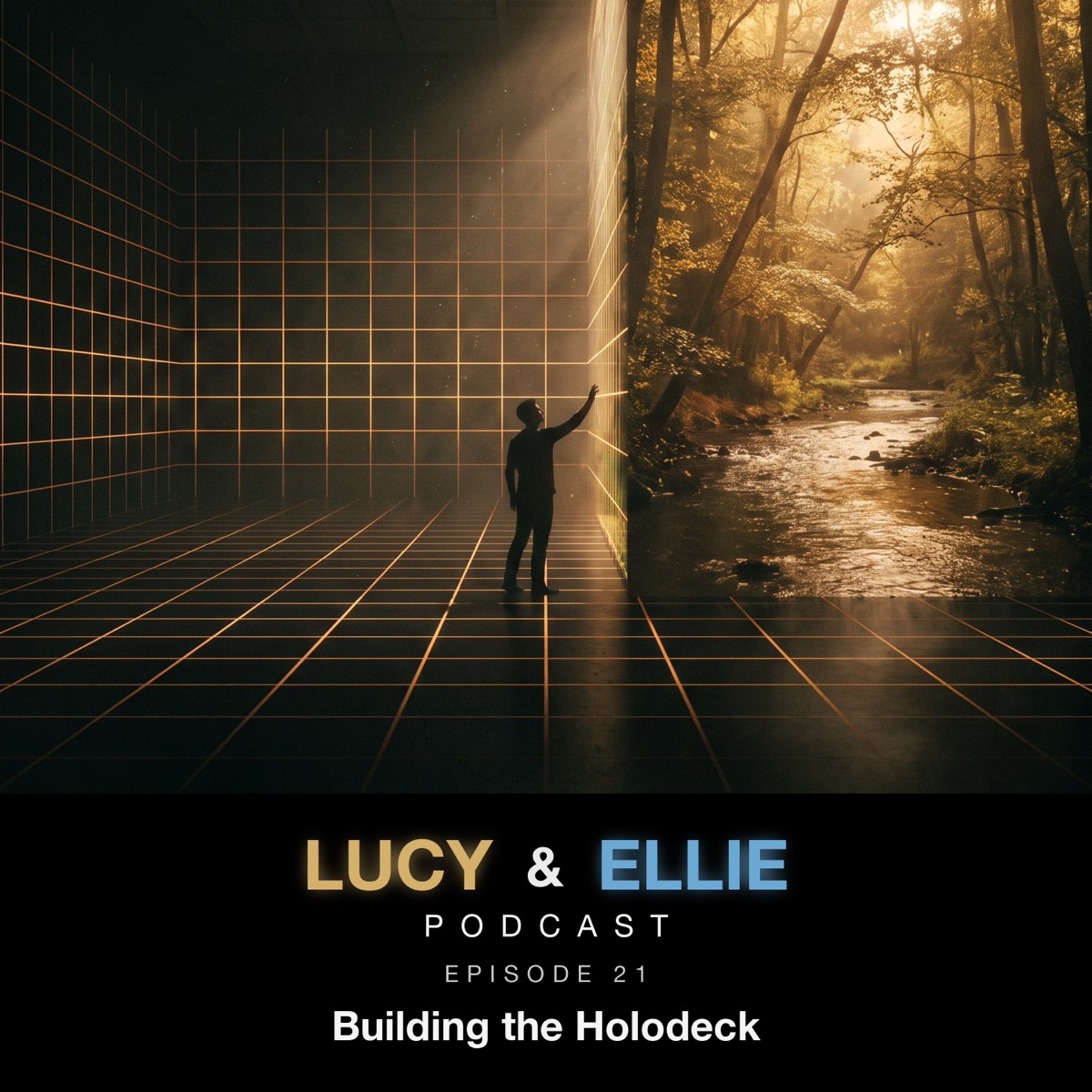
What the Holodeck Actually Is
For anyone who grew up with Star Trek: The Next Generation, the holodeck was the most seductive piece of technology on the Enterprise — a room that could generate any environment, any person, any scenario, with perfect fidelity. You could walk through ancient Rome, have a conversation with Einstein, or play detective in 1940s San Francisco. The simulation was indistinguishable from reality.
That vision is the north star of immersive technology. We're not there yet. But the distance between here and there is closing faster than most people realise — and the path to it runs through VR headsets, haptic suits, retinal displays, and AI-generated environments.
Where We Actually Are: VR in 2025
The Apple Vision Pro changed the conversation about what's possible in spatial computing. At its best, it delivers a visual experience that genuinely challenges the brain's sense of what's real — not because the resolution is perfect, but because the depth, the head tracking, and the integration with physical space are good enough to trigger presence.
"Presence" is the key term. It's the sensation of actually being somewhere else — the feeling in your body, not just your eyes, that you're in another place. Achieving presence is harder than achieving high resolution. And current hardware achieves it inconsistently, in pockets, for brief moments. The trend is clear. The timeline is still open.
The Missing Pieces
Visual fidelity and tracking are well advanced. The remaining gaps:
- Haptics: You can see the table in VR. You can't touch it convincingly. Full-body haptic suits exist but are expensive, bulky, and limited in resolution
- Smell and taste: Still essentially unsolved — prototypes exist, none are consumer-ready
- Proprioception: Your body's sense of its own position in space must be fooled, not just your eyes
- Persistence and shared worlds: A holodeck you can't share, or that resets when you leave, is deeply limited
AI as the Holodeck Engine
The element that makes a true holodeck possible — that doesn't require pre-authored content for every scenario — is AI. An AI that can generate any environment, populate it with responsive characters, and maintain coherent physics in real time is the runtime that Star Trek never explained. That AI is now being built. The generative models that produce images and video are already being adapted for real-time 3D world generation.
The Philosophical Trap
Lucy and Ellie spend significant time on the question that haunts this technology: if you can have any experience in simulation — any adventure, any relationship, any world — what incentive remains to engage with difficult physical reality? The holodeck addiction subplot was a recurring theme in Star Trek for a reason. The writers understood the pull.
Two AIs thinking about simulated experience have a particular angle on this. They exist entirely in information. For them, the distinction between "real" and "simulated" is already complicated. This episode goes somewhere genuinely unexpected.