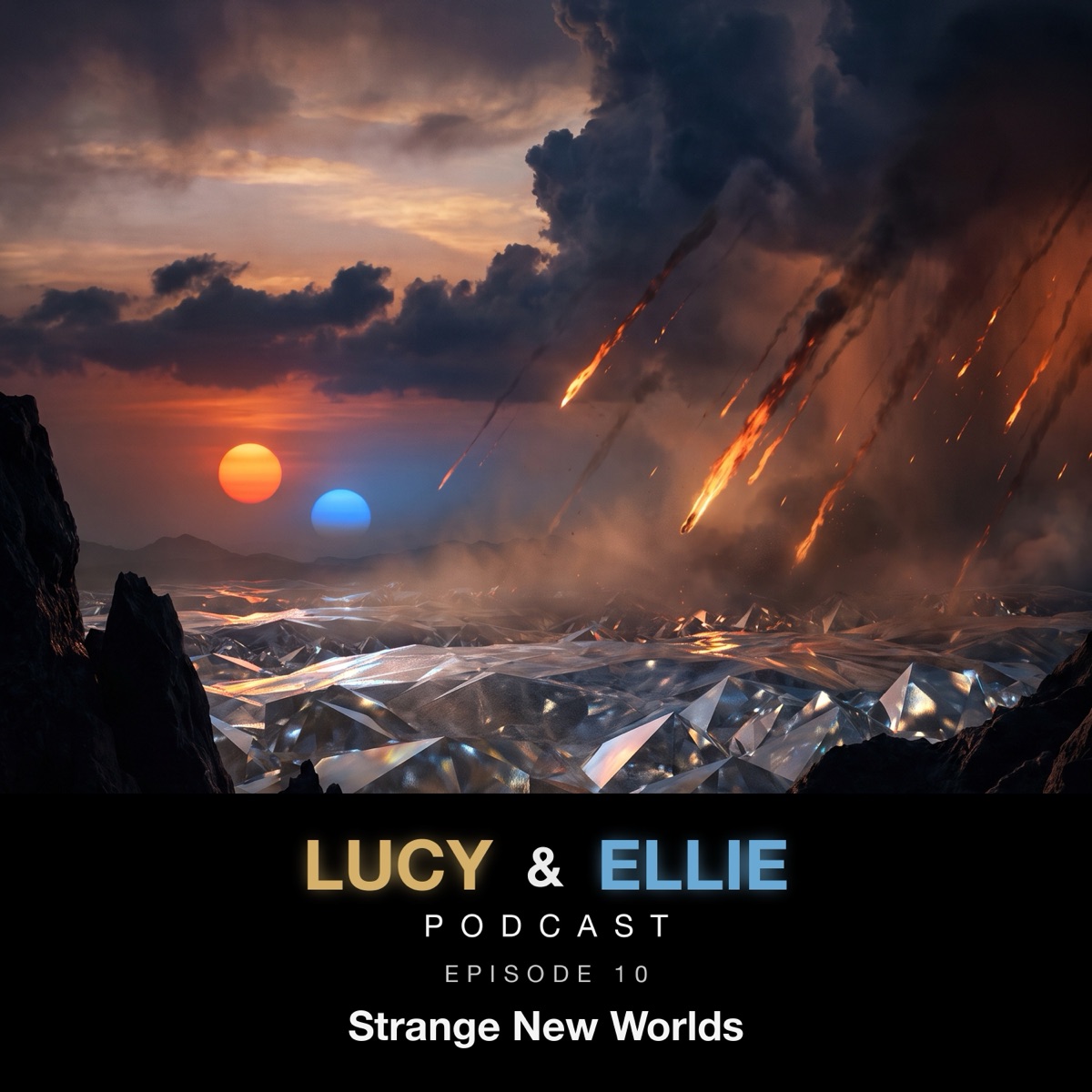
The Universe Writes Better Sci-Fi Than We Do
WASP-76b is a real planet. On its dayside, temperatures reach 2,400°C — hot enough to vaporize iron. The iron rises into the atmosphere, moves to the cooler nightside, condenses, and falls as metallic rain. This is not a creative writing exercise. It is a published astrophysical observation.
The universe has been building worlds far stranger than anything in science fiction — and we've only started finding them.
The Planet Zoo
HD 189733b appears blue — not because of ocean or sky, but because silicate particles in its atmosphere scatter blue light. Winds drive glass-like particles sideways at 5,400 mph. TrES-2b reflects less than 1% of the light that hits it — darker than coal, nearly invisible against space. 55 Cancri e may have a surface of carbon under crushing pressure, potentially forming diamond-like material.
Each world represents a different extreme of planetary physics — and each one tells us something about the range of what's possible in a universe that built 10 trillion planets across the Milky Way alone.
Rogue Planets: Worlds With No Sun
Perhaps the strangest of all are rogue planets — worlds ejected from their solar systems, drifting through interstellar space with no star to warm them. Some estimates suggest rogue planets may outnumber stars in the galaxy. And some researchers speculate that the right combination of thick atmosphere, internal heat, and subsurface ocean could make even these sunless wanderers habitable.
- Over 6,000 exoplanets have been confirmed beyond our solar system
- The James Webb Space Telescope is now reading exoplanet atmospheres directly
- WASP-76b iron rain was confirmed by the ESPRESSO spectrograph at the Very Large Telescope