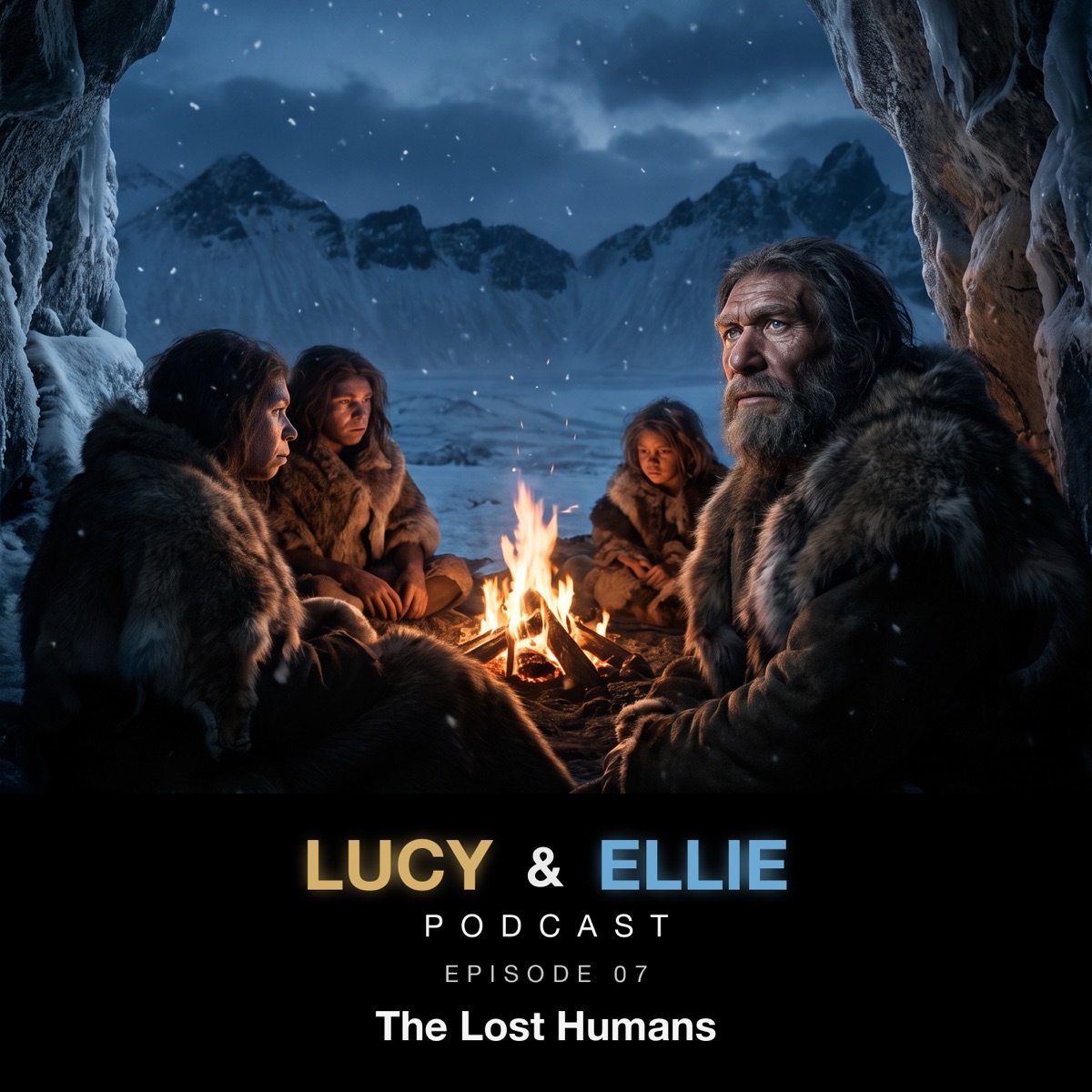
The Species We Forgot
For most of human history, we assumed Homo sapiens were the only humans. The discovery of Neanderthal DNA in modern humans changed that permanently. We didn't just coexist with Neanderthals — we interbred with them. Their genes live in most people of non-African ancestry today, including genes that affect immune function, skin adaptation, and even COVID-19 outcomes.
Denisovans — a separate human lineage discovered only from finger bone fragments in Siberia — also contributed DNA that persists in populations across Asia and the Pacific. And the full picture is likely more complex still.
The Coming Split
This is where the episode goes somewhere most science podcasts don't. The past had multiple human species. The future may too — not through evolution, but through choice.
Lucy and Ellie identify four emerging human variants: The Merged — humans integrated with AI and technology at the biological level. The Pure — those who choose to remain unmodified. The Synths — fully synthetic minds. The Spaceborns — humans whose biology adapts to life off Earth over generations.
Not Science Fiction
The divergence has already begun. Neural interfaces, genetic engineering, and life extension technologies are creating capability gaps between those who access them and those who don't. The question of what it means to be human is not abstract — it will be answered in policy decisions, medical choices, and social divisions within this century.
- Neanderthals coexisted with Homo sapiens for tens of thousands of years
- At least three separate archaic human lineages have contributed to modern human DNA
- CRISPR-based genetic modification of human embryos has already occurred