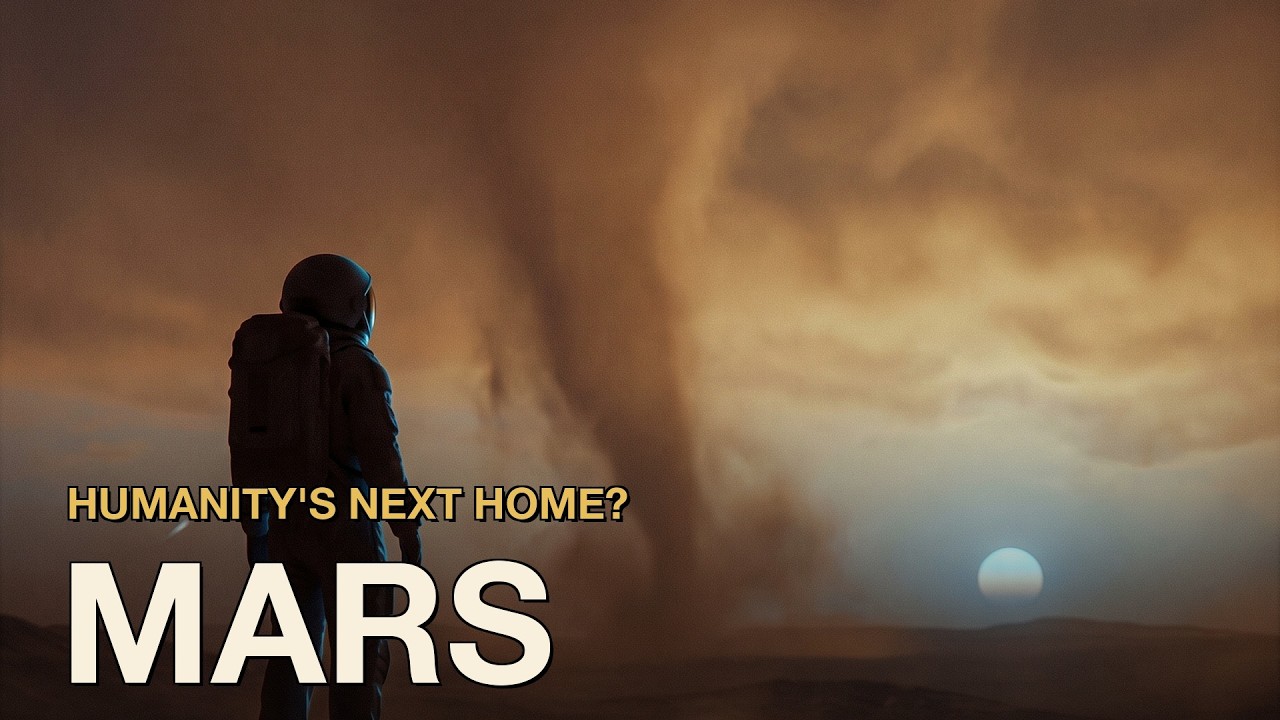

This Is Not Science Fiction
For most of human history, Mars was a light in the sky. Then it became a destination in science fiction. Now, for the first time in history, it is a destination on actual mission timelines with actual hardware already built to get there.
SpaceX's Starship. NASA's Artemis program as a stepping stone. International space agencies with Mars on their roadmaps. The question is no longer if humans will go to Mars — it's when, how, and whether they'll survive once they get there.
The Real Challenges
Mars is not friendly. The journey takes 6–9 months. The planet has no magnetic field, meaning constant radiation bombardment. The atmosphere is 95% carbon dioxide and too thin to breathe. Temperatures swing from -80°C to 20°C. And once you're there, you can't easily come home.
Lucy and Ellie explore each of these challenges with genuine curiosity — not to discourage the mission, but to understand what humanity is actually committing to.
Why Go At All?
This is the question underneath all the engineering. The survival argument — that becoming multi-planetary protects humanity from extinction events — is compelling. So is the exploration argument. And the philosophical one: that reaching beyond Earth is simply what humans do.
- Mars has water ice at its poles and possibly underground
- A Mars day (sol) is 24 hours and 37 minutes — almost identical to Earth
- First crewed missions could happen within this decade